

Plant Empowerment consultant Ton Habraken is one of the driving forces behind the global adoption of energy-efficient and knowledge-driven greenhouse practices. With a background in horticultural consultancy and over a decade at climate screen specialist Ludvig Svensson (a Plant Empowerment Implementation Partner), Ton combines deep technical understanding with a practical, grower-focused approach.
Meet the consultants
Ton Habraken
Published: December 5, 2025
Share?
The Return on Investment (ROI) of double climate screens
When the energy crisis hit in 2022, many growers faced an existential threat as heating costs skyrocketed. But those who had already installed two climate screens, and knew how to work with them, found themselves far more resilient.
“Luckily, the knowledge was already there,” Ton recalls. “Those growers knew what to do. But many who were still producing the old-fashioned way unfortunately paid the price.”
Since then, retrofitting second screens has accelerated quickly, and nearly all new greenhouse builds now include at least two screens, often used for over 2,000–2,500 hours per year. Compared to 2012, when most tomato growers used a single screen for roughly 1,300 hours, this shift represents a major change in climate strategy.
The impact of using two climate screens
Ton explains that the Plant Empowerment approach to producing crops in a controlled environment advises growers to use (two or even three) climate screens without using screen gaps. Arguably, this is one of the main adjustments that growers have to make when they begin to grow plants according to the Plant Empowerment principles.
Using two climate screens is one practical example in creating stable growing conditions:
- reduced heat loss
- stable humidity
- a more consistent plant-head temperature
- stronger, more productive crops
This supports the three natural balances central to Plant Empowerment (water, energy, and assimilates), helping plants use resources more efficiently and build natural resilience.
But adopting this method often means unlearning old habits, such as opening screens too early and losing valuable heat.
“Changing grower behaviour takes time. Before implementing something new, people want to see proof. Large-scale trials have shown that the Plant Empowerment approach can reduce energy use from 28–30 m³ gas per m² to around 14–15 m³ — and new innovations are pushing that even further.”
Further information on Plant Empowerment’s energy-saving techniques is available through the Plant Empowerment’s four-part online course ‘Save Energy in an Integrated Way’.
Discover the courseThe future of sustainable horticulture
The global energy crisis of 2022 serves as a stark reminder of the possible instabilities and challenges that may continue to face growers of greenhouse-grown crops – reinforcing the urgent need for sustainable strategies. With this in mind, Ton expects that the Plant Empowerment Foundation will expand so that there are more consultants available to impart knowledge and help lead the industry into a more sustainable future.
He predicts broader adoption of geothermal energy and green electricity as the sector moves away from fossil fuels: “The whole industry is going to be fossil fuel free in the Netherlands by 2040. And, in most cases, whatever horticultural innovations happen in the Netherlands soon start to then take place in the rest of the world.”
Moreover, he predicts that there will be more greenhouses and vertical farms nearer to, or in, our cities so that protected crop production is better incorporated into everyday life rather than concentrated in clusters away from cities.
The consultant also explains that, with a shrinking range of crop protection armoury available to growers, pest and disease pressures are increasing. The removal of broad-spectrum chemical crop protection products (due to their negative side effects) is allowing new pests, like the stink bug in pepper crops, to become a major problem, as these minor pests were previously controlled unintentionally. To that end, growers are increasingly deploying new physical forms of crop protection, such as insect netting.
“But these precautions have consequences for your greenhouse climate. So, in the coming years we’ll need to develop a joint holistic approach on how to grow protected crops in a different way – to make them even more resilient but with fewer chemicals and to keep the climate active without huge energy inputs.”
Implementing greenhouse climate control
Growing up in a family greenhouse and later studying horticulture and agricultural economics, Ton has spent his career teaching growers how to improve their crops while reducing energy input. His work at Hoogendoorn, LetsGrow.com and, since 2012, at Svensson contributed directly to the development of Next Generation Growing: the foundation on which Plant Empowerment was later built.
“The Plant Empowerment Foundation is a result of joyful cooperation between like-minded people who want to spread the knowledge that is available – and not only the knowledge that’s written in the Plant Empowerment: The Basic Principles book, but also the practical knowledge from the specific companies within the foundation.”
The collaboration between consultants is key: “When one of us hears about an issue in the market, we work on it together. Alone it would take much longer. But together we achieve bigger results, faster.”
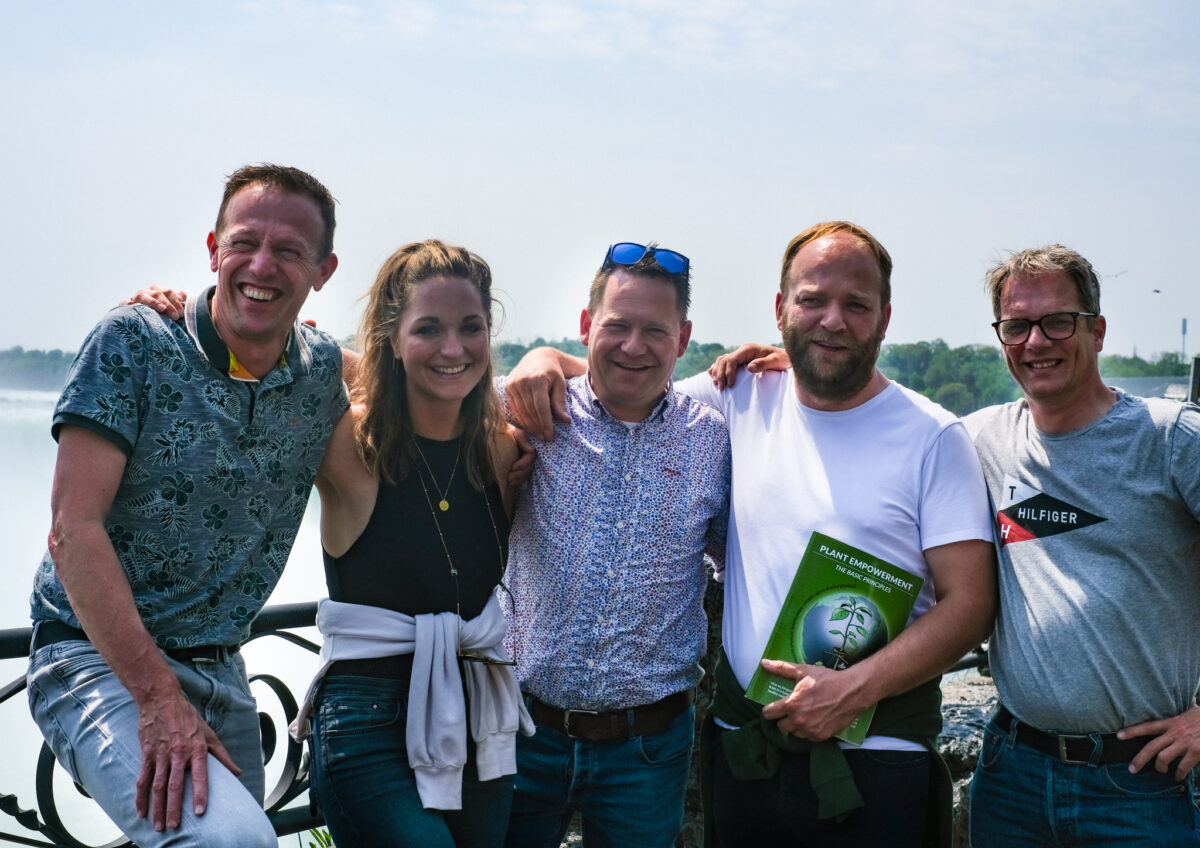
Ton’s Touch: Making learning fun and engaging
Ton is known not only for his expertise, but also for his enthusiasm and light-hearted approach to learning. From quizzes during training sessions to energizing group activities, he brings colour and interaction to every Plant Empowerment event.
“Sometimes it’s good to keep learning with a little bit fun. It helps people remember.”
One example was his quiz during a formal dinner at Plant Empowerment’s workshop in Canada. A playful moment that sparked discussion and connected growers in a relaxed way.
And so, through the ongoing commitment of Ton Habraken and the Plant Empowerment team, their holistic knowledge continues to empower and educate growers in a fun and formative way, ensuring both profitability today and a resilient, sustainable future for protected horticulture.