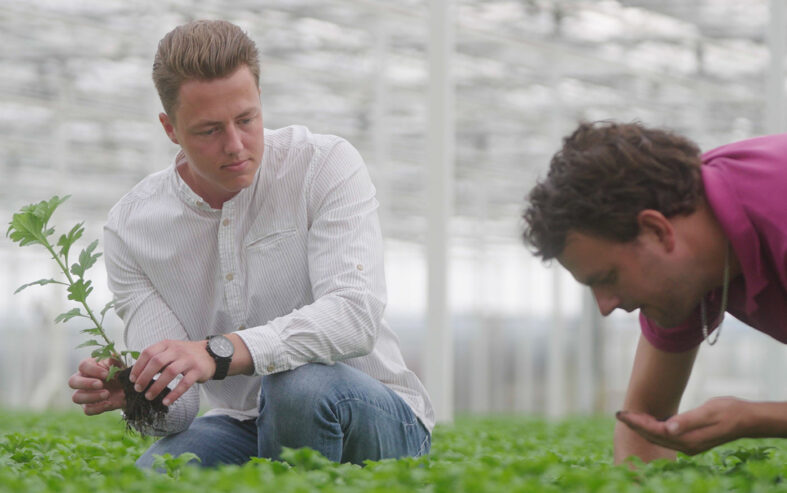
Signify has officially joined the Plant Empowerment network as a lighting partner, participating through its Philips Horticulture LED Solutions portfolio. For Signify’s plant specialist Leontiene van Genuchten, this collaboration is about more than just business – it’s about joining a global knowledge network dedicated to sustainable, data-driven cultivation.
Meet the consultants
Leontiene van Genuchten
Empowering growth through open knowledge sharing
At the core of this partnership is a shared belief that the most complex challenges in horticulture are best solved through collective wisdom. Leontiene reveals that, when plant specialists like herself have questions that are a little bit outside of their own area of expertise, it can be tricky to find someone who can answer their query. But being a member of the Plant Empowerment network means that there will always be a consultant available who has the specific horticultural knowledge they are seeking.
“That is a big win,” she states. “The Plant Empowerment members are not in competition with one another; rather, we are working together and so we feel able to ask ‘obvious’ questions about topics that are not in our comfort zone. And this transparency enables us to share more information with growers and create a ‘full picture’ of managing greenhouse crops – combining lighting with expertise in areas such as substrates, climate control, and screening to help growers reach the next level of sustainable horticultural crop production.”
“It’s like a large family working together,” she adds.
A lifelong passion for Plant Health
Leontiene’s journey into becoming a plant specialist has been driven by a fascination with plants that she’s had since she was a child. “I knew that I always wanted to do something with plants,” she recalls. Leontiene followed her curiosity to successfully complete a BSc in Horticulture at The University of Applied Sciences. After graduating, Leontiene enjoyed roles in horticultural sales and crop protection before moving into horticultural lighting in 2015.
“I’ve always wanted to inform growers,” she says. “The ‘how’ and ‘why’ of plant growth is what excites me and I’m proud to have become a member of the global plant specialist-team of Signify in the world of greenhouse horticulture.”
Leontiene carries out her role via Signify’s “triangle” approach that sees her knowledge combined with its sales representatives and application engineers to ensure the best solution for the business case of the grower. “My colleagues and I learn from one another – and that’s what is also so nice about being a member of Plant Empowerment. We at Signify are broadening our ‘habitat’ to include many more companies. Each company within Plant Empowerment is related to one another’s specialism but also has its own area of expertise. Together, we create a full picture.”
Harnessing the spectrum for balanced growth
Leontiene highlights that lighting does not act in isolation – it interacts with every environmental factor in the greenhouse. And this interconnectedness is, in fact, a key focus of Plant Empowerment’s new online learning programme – The Plant Health Circle which was launched in 2026. The course highlights the crucial role that growing conditions have on plant health – and how growing conditions (including light, temperature, humidity, fertilization and air movement) interact with the plant and influence its resilience.
“There is a lot that we can we do for plant health with our lights,” states Leontiene – who notes, for example, that optimized lighting can increase plants’ natural immunity to pathogens.
About the Plant Health CircleUsing light as a tool for resilient crop growth
“With the knowledge we have built at Signify over the last 20 years with research of the change from HPS to LED and the interaction of (different colours of) light on the plants we continue to help growers make big steps forward in growing resilient, healthy crops sustainably and economically.”
Leontiene explains that state-of-the-art colour controllability – the ability to adjust the specific balance of different light wavelengths to match a plant’s changing needs – is helping growers achieve this aim.
“When I first moved into horticultural lighting it was an interesting time in the sector – most growers were still growing with HPS fixtures and LEDs were a really new technology. The challenge in the beginning was really the change from HPS to LEDs – determining which light recipe a grower required. Now, the focus is on ‘how do you optimize growing with full LED installations with colour controllability with the crop in mind, but also using energy as a business asset through dimming and steering the light spectrum?’”
“For example, if there is a certain threshold of sunlight that comes into the greenhouse, a grower can put the lights on the 100% red channel when there is already an abundance of blue light coming from outside. And at nighttime, when they have no outside sunlight coming in, they’ll need a different colour to what they use when they have full sunlight.”
The bright future of global floriculture
As LED technology progresses and the market reaches saturation in the Benelux region, Leontiene notes that Signify is focused on bringing these innovations to new regions such as China and Mexico. And while “high-wire” vegetables have led the transition to LED, she sees massive potential for the Plant Empowerment philosophy in floriculture, including crops like Chrysanthemums and Gerberas.
“Greenhouses are as old as time, but we are still finding new ways to make production more efficient,” she concludes.
By combining Signify’s technical mastery with The Plant Empowerment Foundation’s holistic growing principles, the partnership is ensuring that the future of horticulture is not just bright, but resilient and sustainable for generations to come.
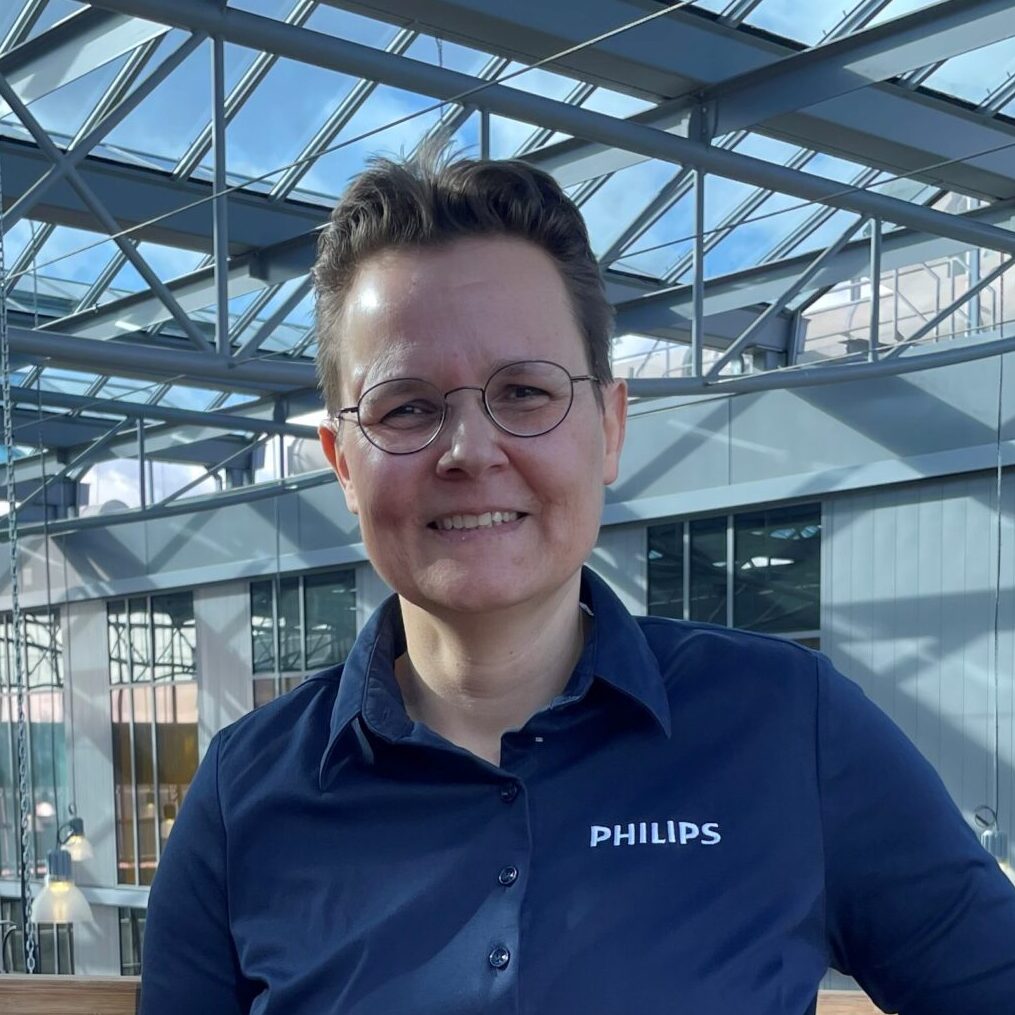
Leontiene van Genuchten
Get in contact