Spider mites are a recurring challenge in greenhouse crops. They often appear suddenly and can develop rapidly, especially under warm and dry conditions. But spider mite pressure is rarely random. Within the Plant Health Circle, a pest only becomes a real problem when three elements come together: the pest is present, the conditions are favourable, and the plant is susceptible. Spider mites are therefore not just a pest issue. They are the result of an interaction between climate, plant balance and biological control. Understanding this interaction is key to staying ahead.
Spider mites in the greenhouse
Climate: the starting point of spider mite pressure
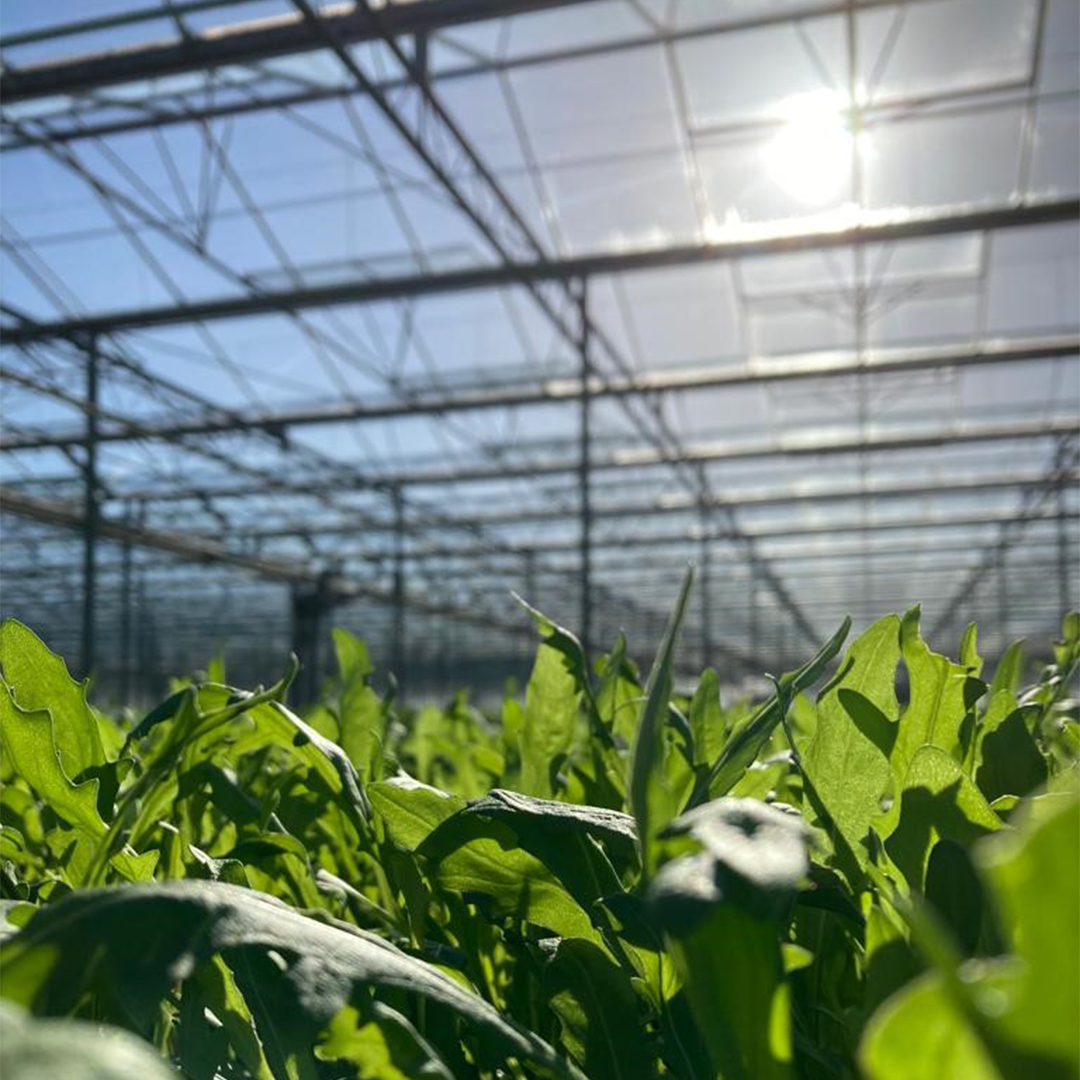
Spider mites thrive in warm and dry environments. These conditions often develop during periods of high radiation, low humidity and limited air buffering.
Greenhouse structure plays an important role. High-volume greenhouses buffer climate fluctuations more effectively, while lower or older structures are more prone to rapid temperature peaks and plant stress. These stress moments create favourable conditions for spider mite development.
In practice, this means that climate is often the underlying driver behind outbreaks. Even if the symptoms only become visible later.
Outbreaks are often predictable
Spider mites spread through air movement, using silk threads to move across the crop. As a result, they tend to appear in the same locations year after year. Typical hotspots include:
- gable sides
- main paths
- areas near poles or structures
- locations close to vents or doors
Scouting is therefore most effective when it is focused on these high-risk zones. If a hotspot has appeared once, it is likely to return in the same location.
Understanding biological balance
Biological control plays a key role in managing spider mites. However, the presence of predatory mites alone does not necessarily indicate that the system is in balance. What matters is whether biological control is establishing itself. This can be observed through reproduction:
- Spider mite eggs are round and white
- Predatory mite eggs are oval and salmon-coloured
The presence of predator eggs indicates that biological control is active and reproducing within the crop, contributing to a more stable balance over time.
The top of the plant determines the pressure
Spider mites often develop in the head of the plant, where conditions are most favourable.
This is where:
- light intensity is highest
- humidity is lowest
- nutrients are actively transported to new growth
At the same time, predatory mites tend to move lower into the crop, where the climate is more stable. This difference explains why control strategies should focus on the top of the plant, both in scouting and in the application of biological control.
Timing and population dynamics
The effectiveness of control is strongly influenced by timing. Early in the season, spider mite populations develop relatively slowly. During this phase, biological control can often keep up with limited intervention.
As temperatures increase, the development speed of spider mites accelerates. Their life cycle shortens, and populations can grow exponentially. At that point, control requires significantly more effort and input. Acting early is therefore not just a preventive measure. It directly influences the efficiency of your strategy.
The point where control becomes difficult
A key moment in spider mite development is the formation of webbing. Once spider mites start producing webs, they create a physical barrier that protects them from predators. This makes biological control significantly less effective.
At the same time, the plant often shows visible stress symptoms, such as discolouration in the head. In practice, this is the point where balance is lost and recovery becomes more complex. Preventing the system from reaching this stage is critical.
From control to equilibrium
In the past, spider mite management often focused on eliminating the pest. However, increasing regulations and resistance are limiting the availability of chemical interventions. As a result, the focus is shifting towards maintaining balance. This balance is determined by the interaction between:
- climate conditions
- plant resilience
- biological control
Spider mites are not the cause of the problem, but the result of how these elements interact.
Conclusion
Spider mites should not be seen as an isolated issue, but as a signal. A signal that conditions are favourable, that the plant is under pressure, or that biological balance is not yet established.
By understanding these underlying factors, growers can move from reacting to outbreaks towards actively managing the system. And in doing so, stay ahead of spider mite pressure.
This article is part of the Plant Health Year Program, where we explore different methods for measuring and understanding plant health.
Continue reading

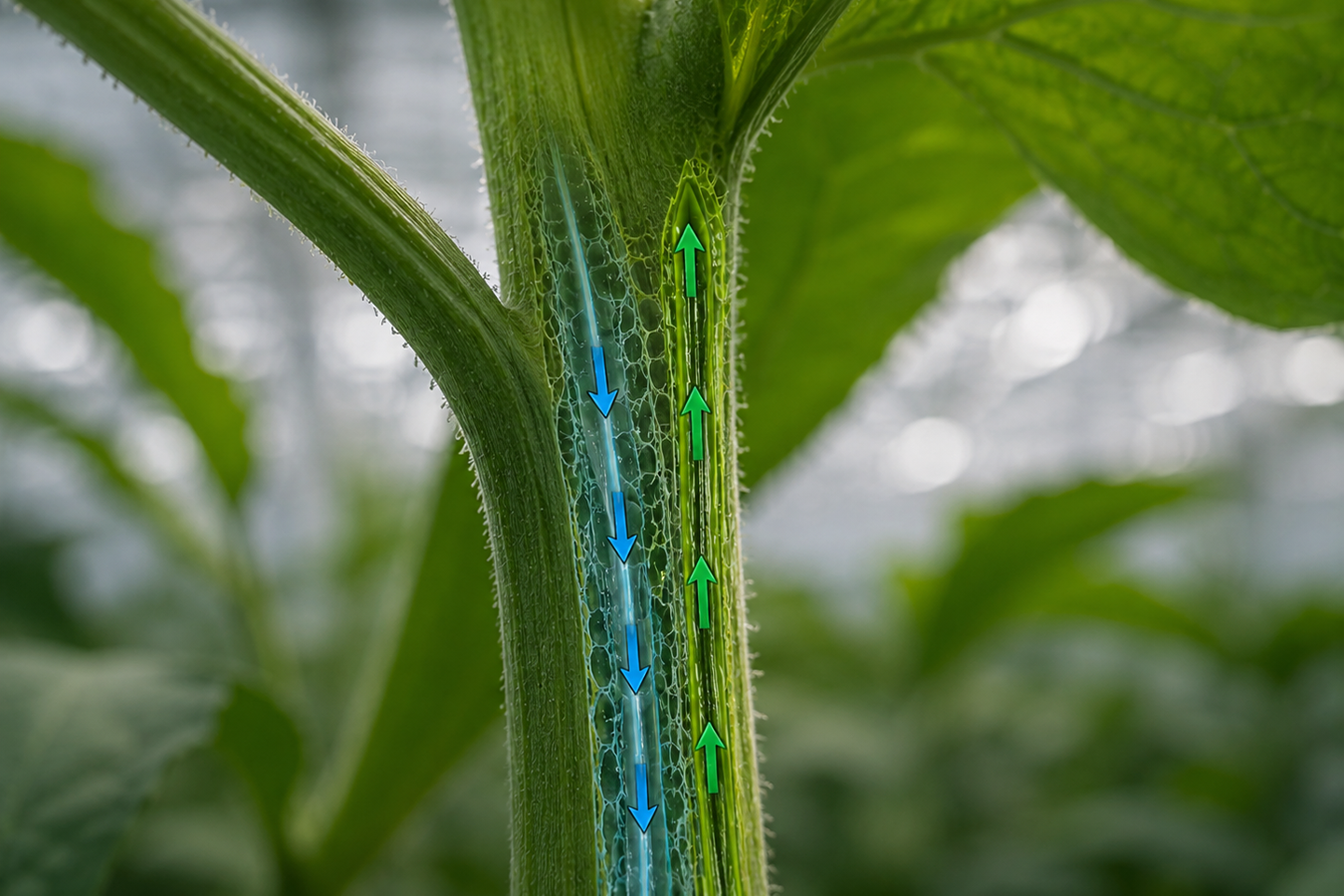
How plants transport water, minerals and sugars
Open: How plants transport water, minerals and sugars
Understanding absolute humidity in greenhouse climate control
Open: Understanding absolute humidity in greenhouse climate control