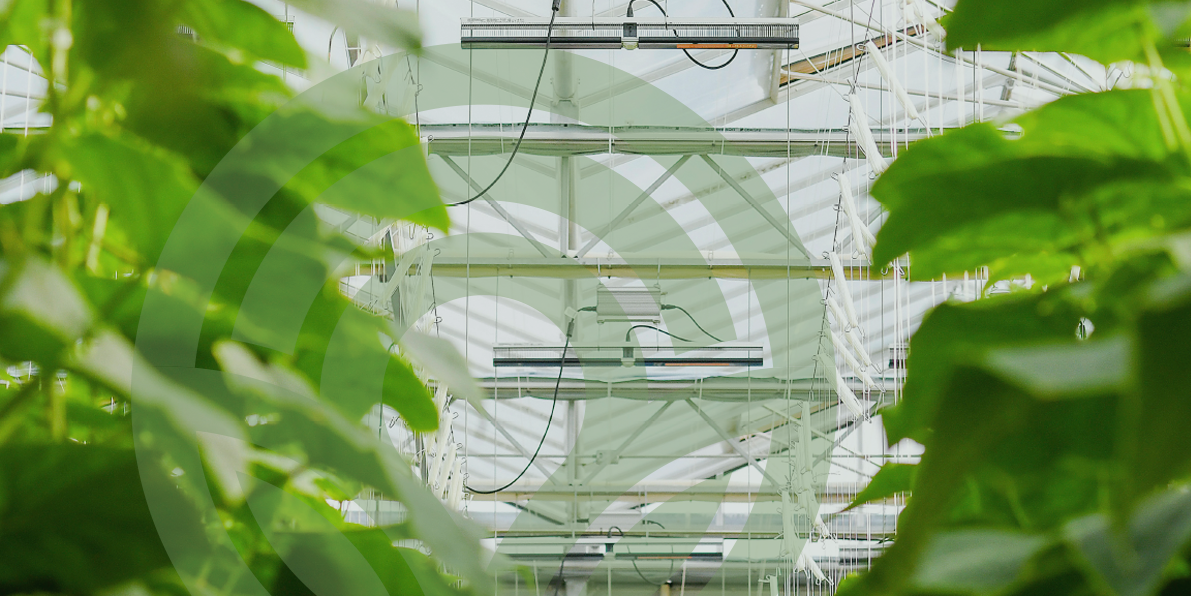
Supplemental lighting is much more than adding light during dark periods. It is a powerful tool to influence plant activity, photosynthesis and crop development. When light is balanced with temperature, humidity and CO₂ availability, growers can improve Light Use Efficiency, maintain active crops throughout the year and create more predictable production.
Area of Expertise
Supplemental Lighting
How does supplemental lighting affect plant growth?
Supplemental lighting provides plants with additional energy for photosynthesis when natural light is insufficient. Its effect depends not only on light intensity, but also on timing, spectrum and the plant’s ability to use the energy available. Aligning lighting with crop demand can support growth, production, quality and energy efficiency.
Light doesn't drive growth on its own.
Plants perform best when light is in balance with the climate.
Driving photosynthesis efficiently
How light, temperature and transpiration interact
Light drives the rate of growth. More light allows the plant to develop faster, but only if the surrounding climate supports the higher activity. Effective light management therefore goes beyond intensity alone. It is about ensuring that temperature, humidity, and airflow move in step with the plant’s increased photosynthetic demand.
When the climate supports the light level, the crop can process the extra energy without overheating or drying out. Light becomes a strategic steering tool that helps maintain momentum during darker periods of the year.
Good integration of light and climate creates an active plant that can grow efficiently and predictably.

Leontiene van Genuchten
Contact the expert
Want to know more about supplemental lighting?
Related expertise