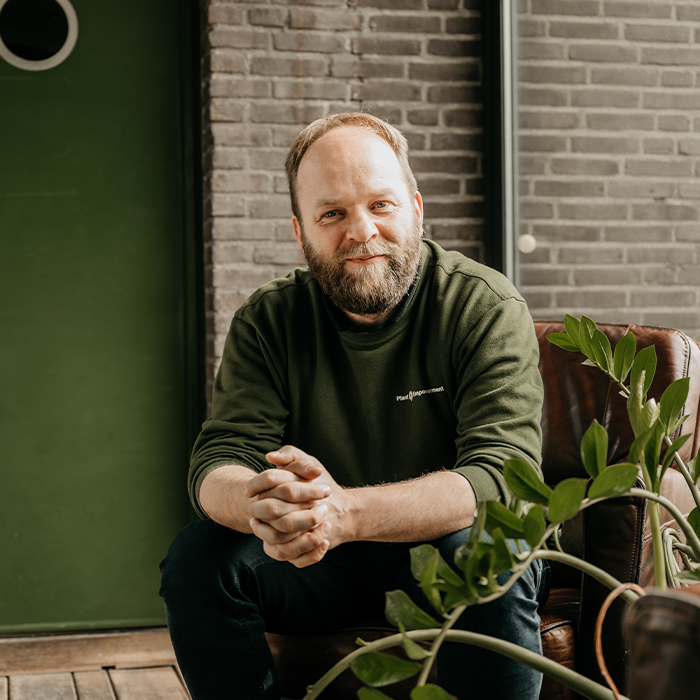
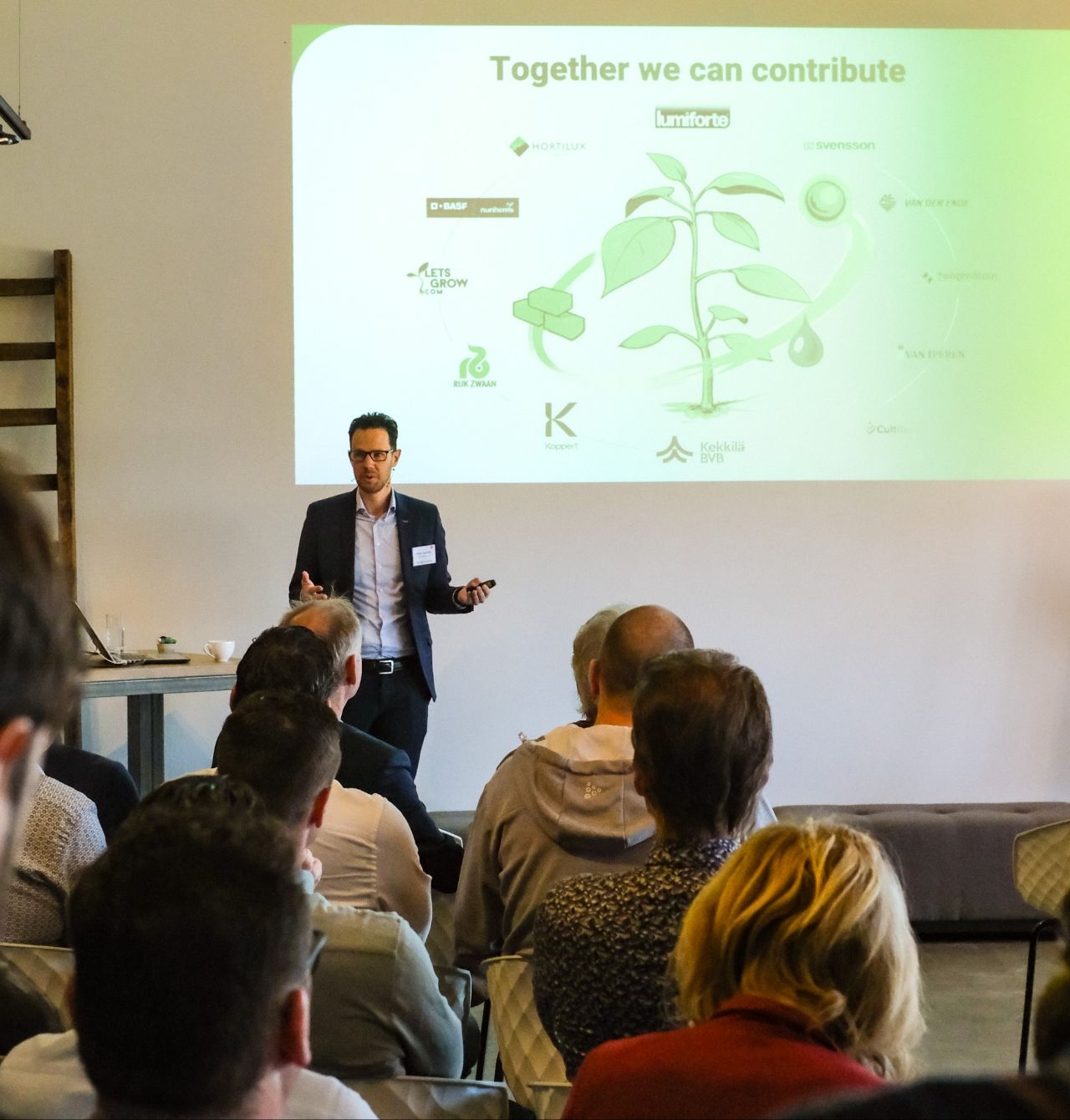
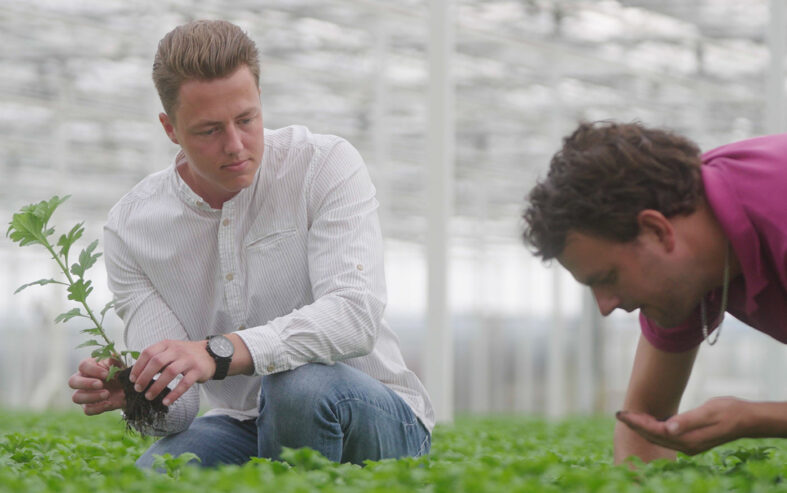
From catching insects as a child to helping shape the future of Plant Empowerment, Stijn Jochems has always been fascinated by nature and the way nature works. Today, he brings together growers, consultants, researchers and technology partners, driven by a simple question: how can we understand plants better and use that knowledge to grow more effectively?
Meet the team
Stijn Jochems
A fascination with plants
Stijn’s interest in plants and nature started at an early age. Growing up in a small village surrounded by horticultural companies, he spent much of his childhood outdoors, studying flowers, insects and anything else he could find.
“I was always outside when I was young. I liked putting insects into jars, looking at pictures and studying flowers. From an early age, I just found nature fascinating.”
His interest continued at school, where biology and physics were among his favourite subjects. His father had also worked in greenhouse horticulture and regularly took Stijn along to greenhouses. “What I find really interesting is that a plant is actually very simple, but at the same time incredibly complex. A plant has been around for millions of years and already knows how to grow without us doing anything. But when we try to support those processes in a greenhouse, things become much more complicated.”
Understanding how plants work
Before joining Plant Empowerment, Stijn spent five years working in horticultural research at Delphy, with a particular interest in lighting, climate and plant physiology. Working directly with growers taught him an important lesson: knowing what to do is not always the same as understanding why.
He remembers growers describing a plant as “lazy” or saying that it was “standing still”. For Stijn, those descriptions immediately raised questions. What does a lazy plant actually mean? And how can you measure it?
This is one of the reasons he became increasingly interested in data-driven growing and the Plant Empowerment approach. Data provides a common language for discussing what is happening inside and around the plant. “When we talked about numbers and data, that was a language I could speak. It allowed us to have a discussion and learn from each other.”
That way of thinking became even clearer when Stijn worked in a climate chamber, where almost every environmental factor could be controlled. At first, he thought it would make growing relatively straightforward. In reality, having so much control created even more questions.
“Why 24 degrees? Why 22? Why 24 hours of light? Why not 30? We don’t know exactly how a plant responds to everything we do.”
For Stijn, that uncertainty is not frustrating. It is precisely what makes horticulture interesting. By collecting the right data and observing how plants respond, growers can gradually learn which actions lead to which results. “Plant Empowerment really increases your ability to learn. Instead of looking at the plant and making decisions based only on feeling, you can look at the numbers and ask: if I do this, what happens?”
Connecting knowledge
This desire to understand and learn is also central to Stijn’s role within Plant Empowerment. One of the things he enjoys most is connecting people with different areas of expertise. Greenhouse horticulture has become increasingly specialised, with experts in lighting, irrigation, climate, crop management and data each bringing their own knowledge to the table. But the plant does not experience these areas separately.
“A lighting specialist talks about lighting, someone else talks about irrigation, another person talks about fertilisation. But a grower cannot know everything about every specialist field.”
Bringing these perspectives together is therefore one of the strengths of Plant Empowerment. Rather than looking at individual aspects of cultivation in isolation, the philosophy encourages growers and specialists to look at how the different factors interact. “We can give a grower a more complete picture and a more complete piece of advice than any one specialist can give on their own.”
What makes a great grower?
There is often a perception that Dutch growers are among the best in the world. But Stijn questions whether being successful in one particular climate or production system automatically makes someone the best grower.
“Dutch growers are very good at growing in a Dutch climate. But if you suddenly put a Dutch grower in a completely different climate with a different crop, they may have a very difficult task.” For Stijn, adaptability is therefore just as important as experience. “Is the best grower the one who gets the maximum out of a certain situation? Or is it the grower who can adapt best when the situation changes?”
He believes the ability to keep learning and adjust to changing circumstances is what ultimately makes a grower stronger. “If you are always able to change based on the situation and remain open to learning, you will ultimately become the best grower for that particular situation.”
Building the future of Plant Empowerment
Stijn joined the Plant Empowerment Foundation around a year and a half ago and now manages the foundation’s activities and future direction. One of his ambitions is to make Plant Empowerment more than a source of training and information. “I would really like Plant Empowerment to become a knowledge hub. If people have questions, they should be able to come to Plant Empowerment.”
That means connecting growers, universities, consultants and other experts and creating a place where knowledge can be shared more easily. It also means continuing to listen to growers and adapting the foundation’s programmes to what they actually need.
The Plant Empowerment Plant Health Year Program is one example of this development. Rather than offering training as a standalone moment, the programme creates a longer learning journey around plant health, combining knowledge, data and practical application.
For Stijn, this is an important distinction. “It shouldn’t be the endpoint. It should actually be the starting point for developing knowledge.”
Always look for possibilities
Despite his management role, Stijn’s motivation remains remarkably close to what interested him in plants in the first place: curiosity.
His advice to growers is therefore not to assume that they have to start from scratch or that everything they are doing needs to change. Instead, he encourages them to recognise how much they already know, while remaining open to learning more. “Be proud and happy with where you are, what you have achieved and what you already know. But at the same time, realise that you can always keep learning and developing yourself.”
His personal motto sums it up neatly: “Always keep looking for possibilities.”
For Stijn, that is what makes horticulture so interesting. There is always another question to ask, another connection to make and another possibility to explore. And that is exactly the kind of thinking he hopes to bring to the next chapter of Plant Empowerment.
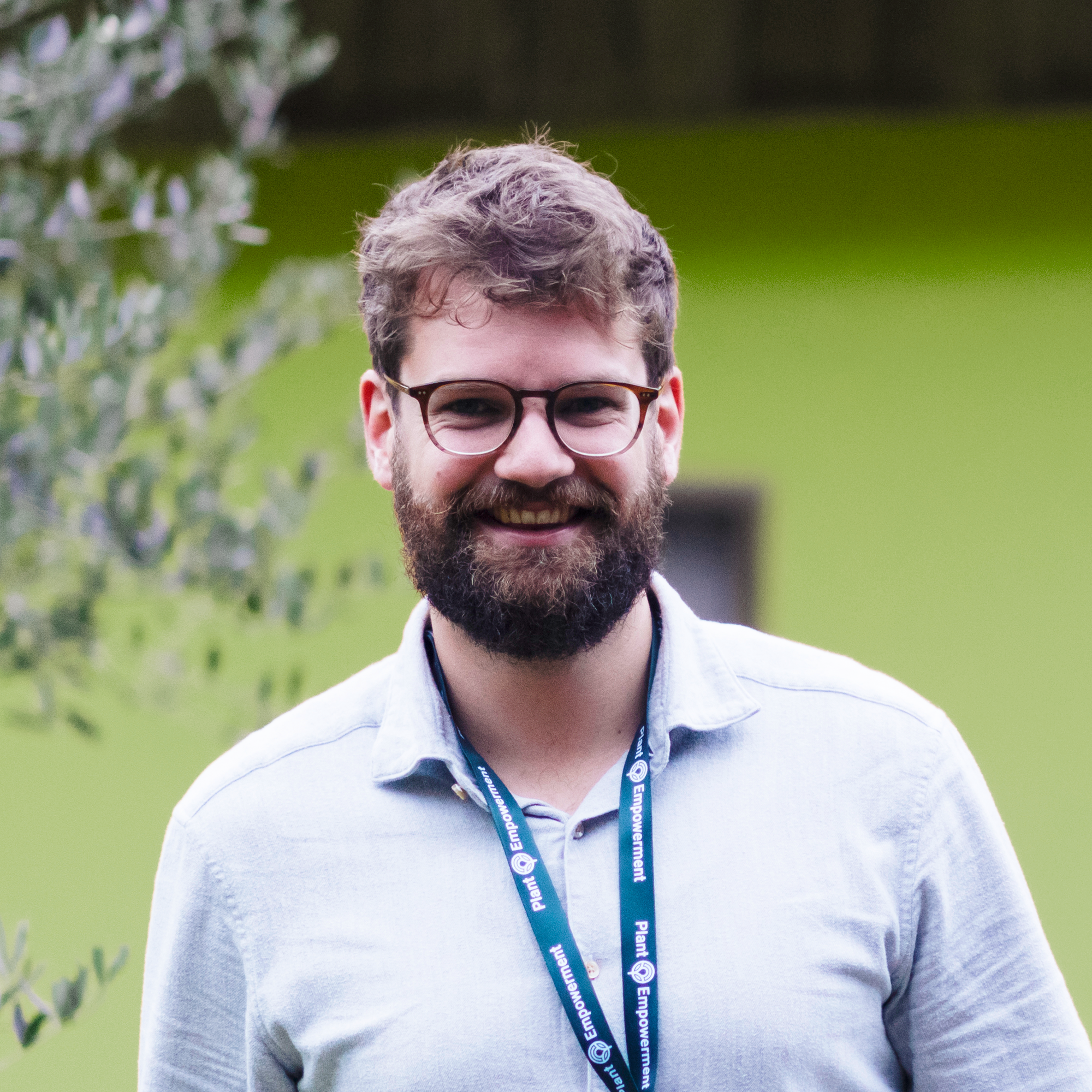
Stijn Jochems
Get in contact