Some people look to the stars to find the great unknown; others look to the depths. For Lisa Broekhuizen, a journey into ocean mysteries shifted to the microscopic universe of insects. Here, the Koppert consultant shares how a passion for understanding nature evolved into helping growers build healthier, more resilient crops through biological control and Plant Empowerment.
Meet the consultants
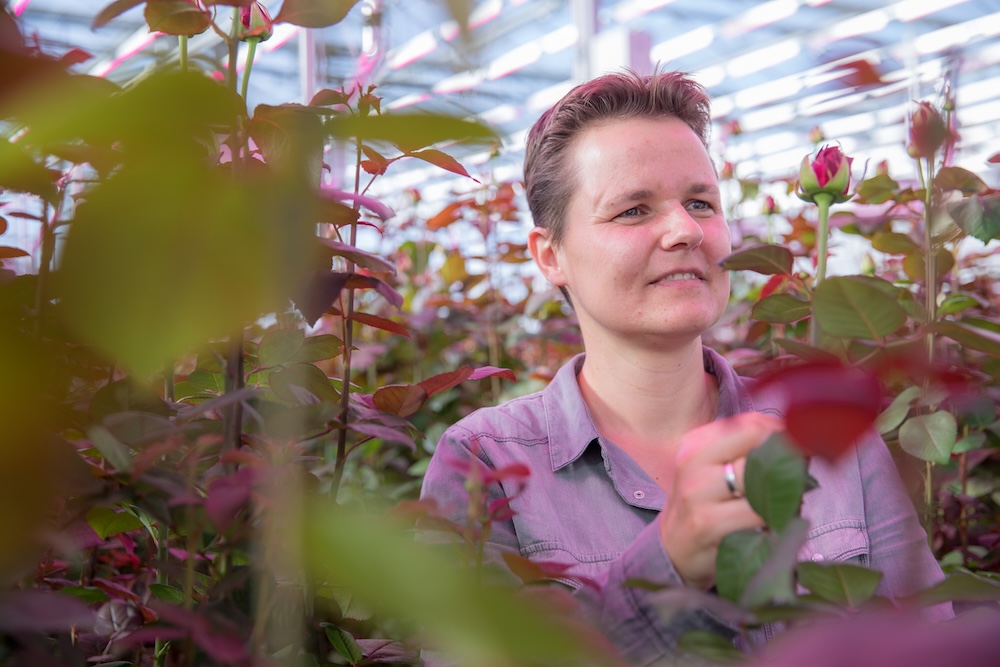
Lisa Broekhuizen
An unexpected journey into entomology
Lisa, the first pest control specialist to join Plant Empowerment’s team of consultants, originally studied biology at Wageningen University to become a marine biologist.
“I liked scuba diving and I found the underwater world so interesting. But the marine biology department was very popular and so the thesis spaces filled up quickly. They only had space for me in the entomology department. So, that is when I was first introduced to the world of insects.”
“But when I started learning about them and how they work and survive, I realised that they’re one of the most successful members of our animal kingdom – living in such big numbers together, cooperating and often surviving in very extreme circumstances. And Earth cannot survive one day without insects because they provide so many ecosystem services for us, many of which we don’t even think about.”
Connecting data and biology
Interestingly, she studied alongside fellow Plant Empowerment consultant Heleen Lugt of LetsGrow.com.
“There are so many directions you can go in with biology. Heleen’s studies went in a different direction to mine. But now that we are both Plant Empowerment consultants, we can see our two specialisms fitting together. At Koppert, we’re starting to combine the data we gain from biological crop control with climate data. So hopefully, in the near future, Heleen will tell me: ‘Now that the temperature is really rising and the humidity is going down, Lisa, I think now we can put on a spider mite alert.’”
From the laboratory to the field
Following her degree, Lisa completed her master’s thesis in Sao Paulo, Brazil.
“My thesis was on biological crop control in tomato crops – examining different, native species of Macrolophus for the control the Tuta absoluta (leaf miner) and their behaviour in the crop, such as where they lay their eggs.”
She continues: “On completing my thesis in Brazil, I interned – and then became a full-time employee – at Koppert Netherlands. I started in the laboratory but quickly realised I wanted to support growers directly with their real-world challenges. During a field visit, a grower asked me about a parasitic wasp I was researching for the control of Nezara (stink bugs). Answering those questions made me feel incredibly useful. That ‘wow’ moment convinced me to leave the lab for the field, where I could directly exchange knowledge with growers.”
Now with Koppert for nine years, Lisa joined the Plant Empowerment Foundation a year ago.
“In my role as a Plant Empowerment consultant, I enjoy meeting growers in person – either at their nurseries or at events such as the Plant Empowerment Summer School. It’s always nice to hear about what’s keeping them busy, what their challenges are, and I like being able to really make a difference to their crops. Times are changing and challenges are changing, so it’s always nice to have in-person discussions and conversations.”
Optimising crop management for beneficials
Lisa notes that a different crop management would help the beneficial insects a lot.
“I think there are still a lot of challenges about the work that is carried out on crops in connection with the biological crop control. If people complain that the biologicals are not working it’s often because their crop management practices are affecting the beneficials.”
“For example, by discarding plant cuttings on the nursery floor we can inadvertently remove the natural enemies at certain stages their life cycle, such as the egg of nymph stage, when they don’t yet have wings and are unable to fly back to the crop.”
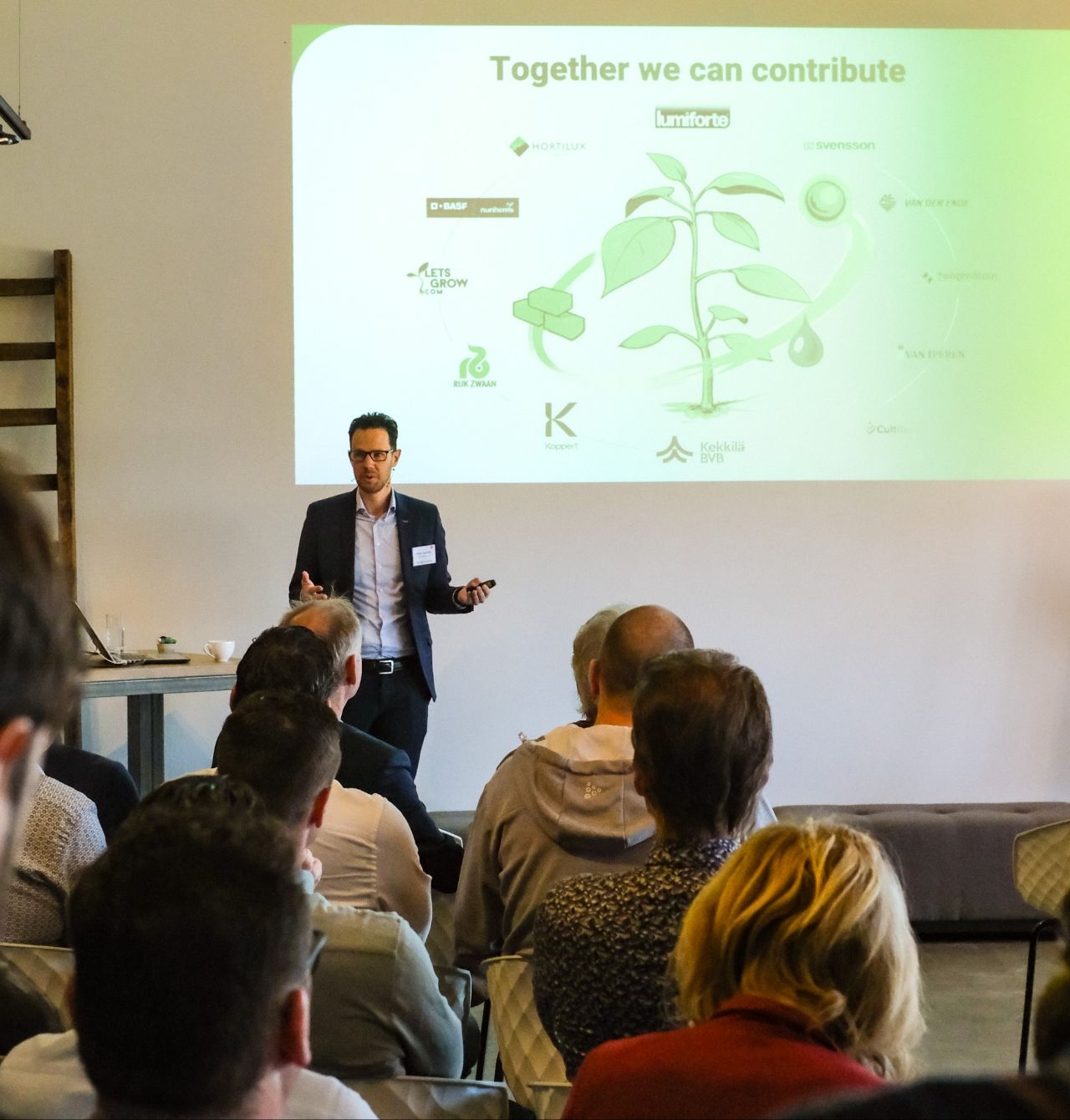
At the June 2026 Plant Empowerment Summer School at GreenTech Amsterdam, the consultant emphasised the importance of proactive seasonal planning and weekly monitoring.
I discussed scouting for pests and encouraged the growers to have a plan ready in advance of the season – and to proactively gain more knowledge about their crop and the pests it attracts because what I often see, every year, is growers facing the same problems around the same time of the year. “
“Moreover, when you consistently collect data every week you can create a trend line showing the increases or decreases in pest populations that you can then use to help them make more informed decisions – such as when to release more beneficials into the crop.”
Managing nutrients and microclimates
Lisa also provides guidance via online learning programme videos, such as through Plant Empowerment’s Mastering the Dynamics of Your Plant series.
“The videos have had a lot of viewers, which is great,” the consultants says, proudly.
In this series, she warns growers against over-applying nitrogen, which fuels pests like aphids. She also notes how microclimates can complicate spider mite control, as predators prefer cooler, humid sections of the crop while the pests stay in the drier, warmer tops of the plants. Lisa therefore recommends sprinkling predators directly onto plant heads weekly.
A holistic, collaborative approach
At the 2026 Summer School, Lisa co-presented alongside Mark van de Werf to highlight multidisciplinary solutions.
Lisa explains: “I’m all about beneficial insects, but this aspect of horticulture has so many correlations with other elements of crop production in the greenhouse, such as fertiliser and biostimulant application, which is what Mark presented about during the summer school. There are so many considerations that we often don’t think about, and we can really give a grower an added value when, as consultants, we’re able to collaborate with our fellow Plant Empowerment consultants to problem solve.”
This type of integration is also fostered during the Plant Empowerment Consultancy Day.
The consultant says: “I love meeting, and working with, other Plant Empowerment consultants. I learn from them, they learn from me, and that’s really nice. I don’t have these kinds of conversations in any other contexts. So, the Plant Empowerment Foundation really provides new knowledge to me.”
“And the greatest power of Plant Empowerment is its ability to bring our knowledge to the growers – to not only consider solutions for them from a commercial perspective but from a holistic perspective, too. It’s about thinking about the challenges they [the growers] are facing, but also thinking further than your own specialty as a consultant.”
Balancing automation and nature
Rising costs are driving digitisation and robotics.
“It can be hard to motivate members of staff these days – that is a big challenge. And labour is also becoming very expensive. And everybody wants to save money on labour costs, which steers us into the direction of two key trends – robotisation and digitisation.”
Despite rising automation, nature-borne options remain paramount, asserts Lisa.
“I really do believe that for all pest problems there are natural enemies. We really can grow crops without chemicals. I really think it’s possible. Of course, it’s a big challenge with such a big human population, but still, I think all solutions are somewhere in nature.”
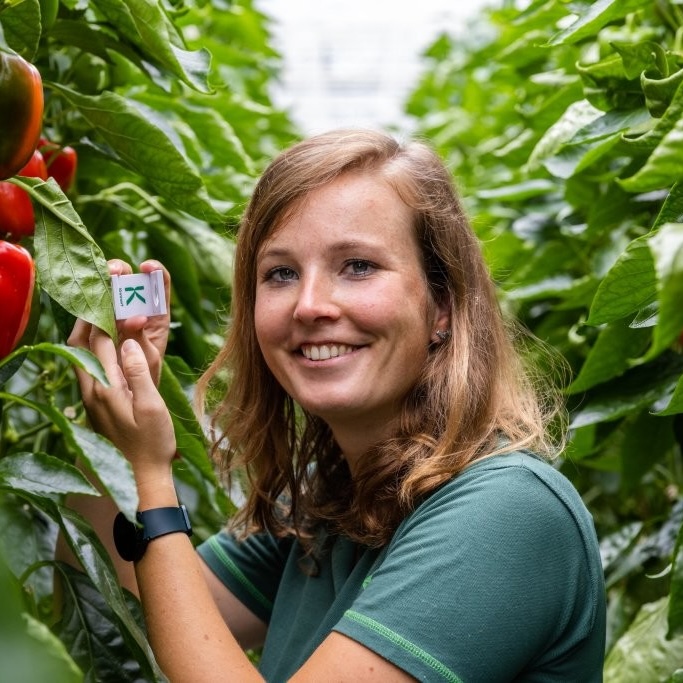
Lisa Broekhuizen
Get in contact