In this course we explore where assimilates go inside and around the plant, including root growth, root exudates and plant defence. You’ll learn why these “invisible sinks” matter for plant health, how stress can quickly affect assimilate allocation, and how plants use their relationship with microbes to access nutrients and support resilience. This course is also included in the Plant Empowerment Full Membership.
Course
Where do your assimilates really go?
Where do the sugars produced by photosynthesis actually go?
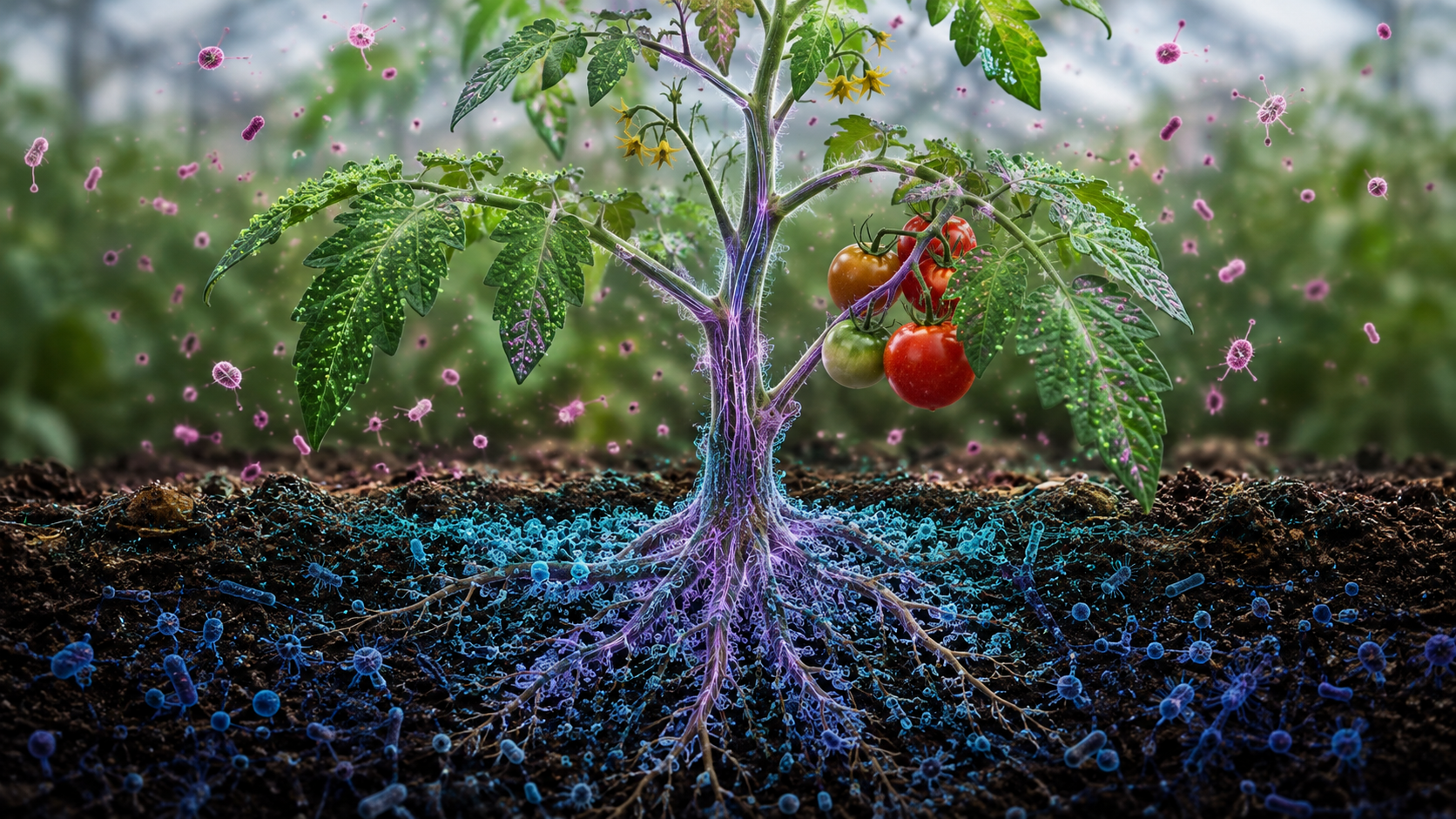
Not all assimilates end up in the crop you can see. A significant part is invested in roots, root exudates, microbial interactions and plant defence. These invisible sinks are essential for maintaining a healthy, resilient plant.
In this course, we explain how assimilate allocation works, why plants need to reserve sugars for these processes, and how growers can use this understanding to make better decisions around climate, crop load and stress.
Course details
Who should join?
This course is for growers, crop specialists, consultants and horticultural professionals who want to better understand how assimilates are distributed through the plant and how this affects plant health and production.
Why this course?
Learn why not all assimilates go into visible growth and production. Understand the role of roots, root exudates, microbes and plant defence, and how managing assimilate balance can support healthier, more resilient crops.
About the course
This course is part of Mastering the Dynamics of Your Plant, a year-long learning program built around the Plant Health Circle. Throughout the program, you’ll discover how growing conditions, plant resilience and pests & diseases interact, helping you better understand plant behaviour and make more informed growing decisions.
About the programAbout the trainer
Mark van der Werf – Plant Health Specialist
Mark has years of experience translating plant physiology into practical cultivation strategies. His passion is helping growers understand the processes taking place inside the plant, so they can make better decisions and build naturally resilient crops. During this webinar, he’ll make the science behind pH and Eh easy to understand and directly applicable in greenhouse practice.
Meet the authorPractical information