Crop condensation can create favourable conditions for diseases and affect plant health. To prevent it, growers need to understand the relationship between greenhouse humidity, dew point and the temperature of the plant and fruits.
How to avoid crop condensation?
Understanding condensation risk
One of the goals of Plant Empowerment is to promote plant health. Avoiding crop condensation is an important part of this. Condensation occurs when the temperature of the plant or fruit drops below the dew point temperature of the surrounding air. Assessing the risk therefore requires more than monitoring relative humidity alone. You need to understand the moisture balance of the greenhouse in relation to the temperature of the crop and fruits.
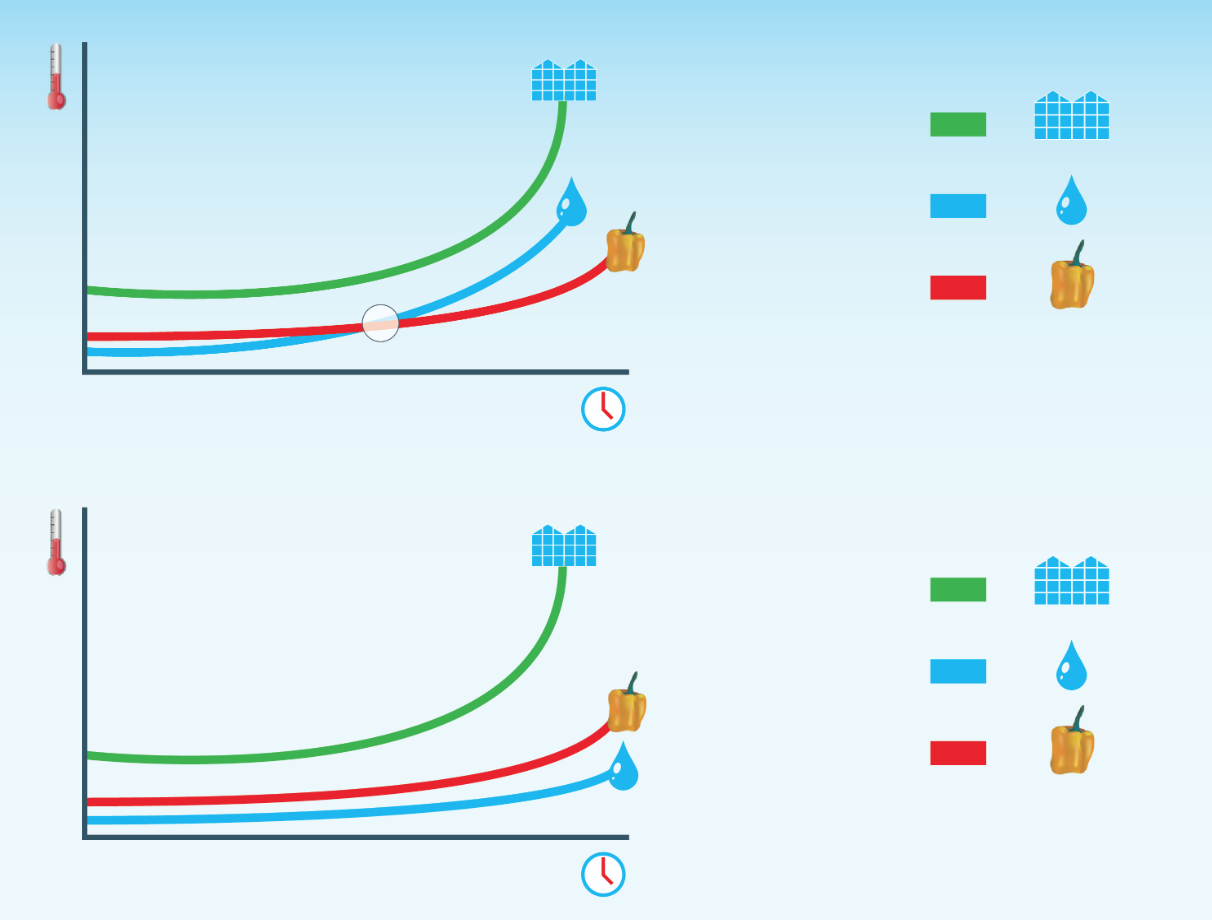
This figure shows two situations. The graphs display the greenhouse temperature (green line), dew point temperature (blue line) and fruit temperature (red line). In the top graph, the dew point temperature crosses the fruit temperature, resulting in crop condensation. In the bottom graph, the dew point temperature remains below the fruit temperature, which helps prevent condensation.
Take action before condensation occurs
The Hoogendoorn crop condensation module monitors this relationship and takes preventive measures when needed. This can include adjusting ventilation, the heating pipe temperature strategy or the screen position.
By only making adjustments when there is an actual risk of condensation, growers can protect plant health while avoiding unnecessary energy losses.
Continue reading

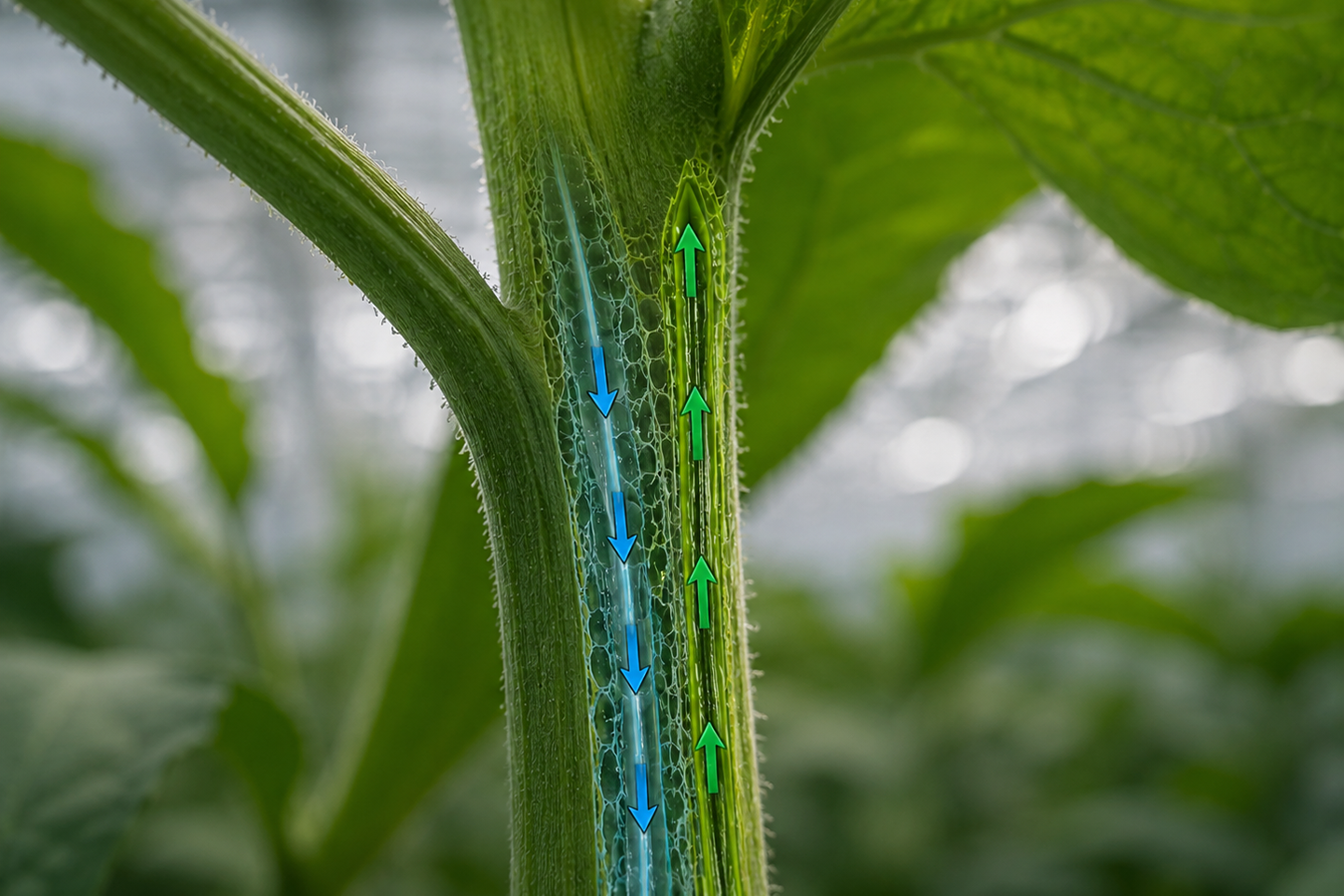
How plants transport water, minerals and sugars
Open: How plants transport water, minerals and sugars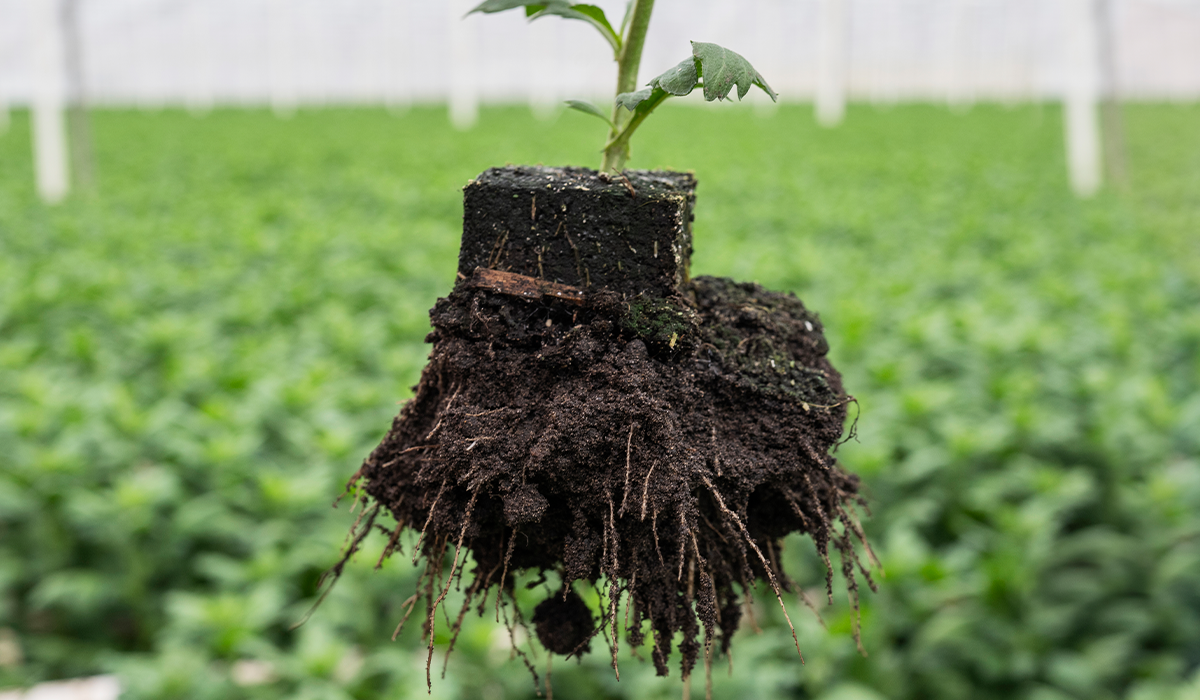
Understanding absolute humidity in greenhouse climate control
Open: Understanding absolute humidity in greenhouse climate control