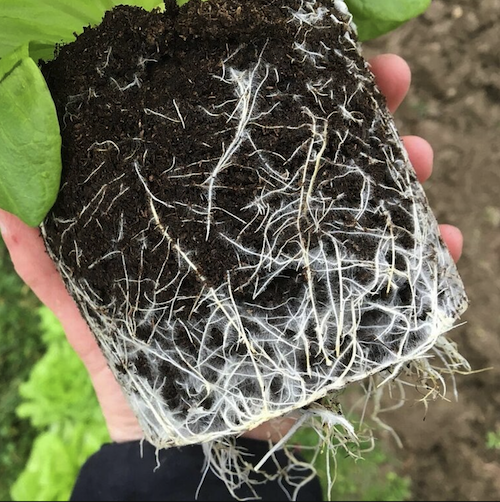
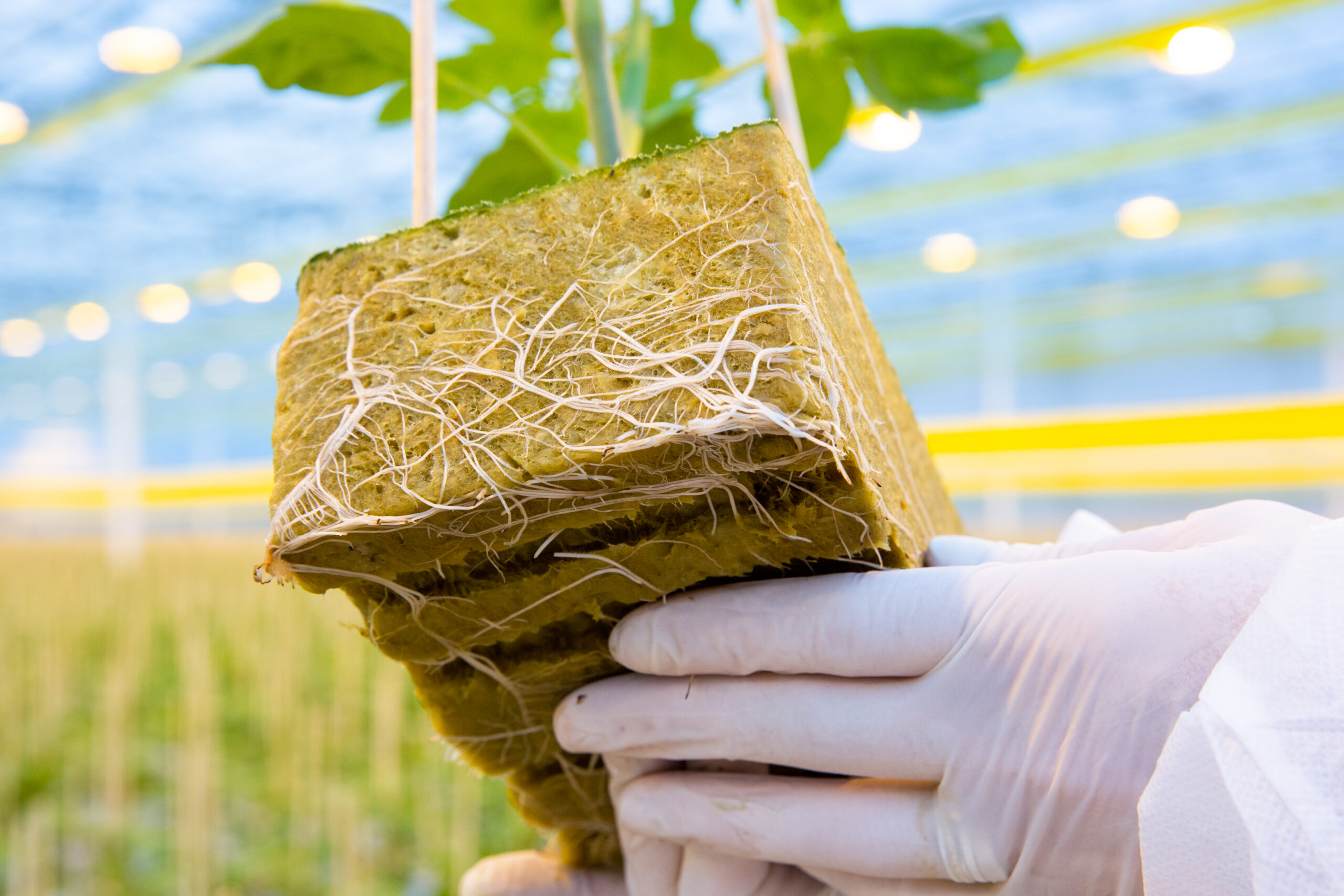
Plants continue to grow every second of the day and night. As they build new cells, they need a continuous supply of water and nutrients. Maintaining sufficient evaporation helps keep this flow moving, even at night or when greenhouse screens are fully closed.
Always keep your plants active
Plants grow 24 hours a day
Every second of the day and night, plants continue to grow and build new cells. To support this process, a constant flow of water and nutrients needs to reach these 24/7 production facilities. To grow strong and resilient crops, we need to empower plants to transport the elements required for this continuous building process. One important way to support this is by maintaining a sufficient rate of evaporation.
During the daytime, energy from the sun generally provides enough energy for evaporation. At night, however, or when greenhouse screens are fully closed, evaporation can slow down. Under these conditions, the plant may need some support to maintain a minimum level of activity.
Why minimum evaporation matters
Research by Wageningen University & Research indicates that a minimum evaporation rate of 10–25 g/m²/hour should be sufficient to support this process.
When a plant evaporates water, water and nutrients are transported to different parts of the plant. This is especially important for immobile elements such as calcium (Ca), which need to be carried by the water flow to the new cells the plant is building.
A sufficient supply of calcium at cell level helps support strong plant tissue. Many disease symptoms can be associated with calcium deficiencies at plant cell level. A leaf tissue sample may show sufficient calcium overall, but that does not necessarily mean that every new plant cell has enough calcium available to remain strong under suboptimal climate conditions or pressure from pests and diseases.
In many cases, deficiencies at plant level can be linked to short periods when evaporation was restricted during the night, sometimes in combination with excessive root pressure.
Keeping the plant active at night
The best way to keep plants active 24 hours a day is to provide them with a form of energy. This can be achieved through radiation exchange or convective exchange. During the night, the most economical approach is convective exchange by maintaining gentle air circulation in the greenhouse. Vertical or horizontal fans can support this process. A subtle air movement of approximately 2–5 cm/s can already be sufficient to achieve the desired effect.
When greenhouse temperatures are high enough, removing humidity through ventilation can also support evaporation. Using heating purely to stimulate evaporation should be considered a last resort, particularly when the aim is to grow more sustainably.
Small movements, continuous growth
Keeping a plant active does not necessarily require large interventions. Even subtle air movement can help maintain minimum evaporation and support the continuous transport of water and nutrients throughout the plant.
By paying attention to what happens during the night and when screens are closed, growers can help prevent short periods of inactivity and create more consistent conditions for strong, resilient plant growth.
Continue reading
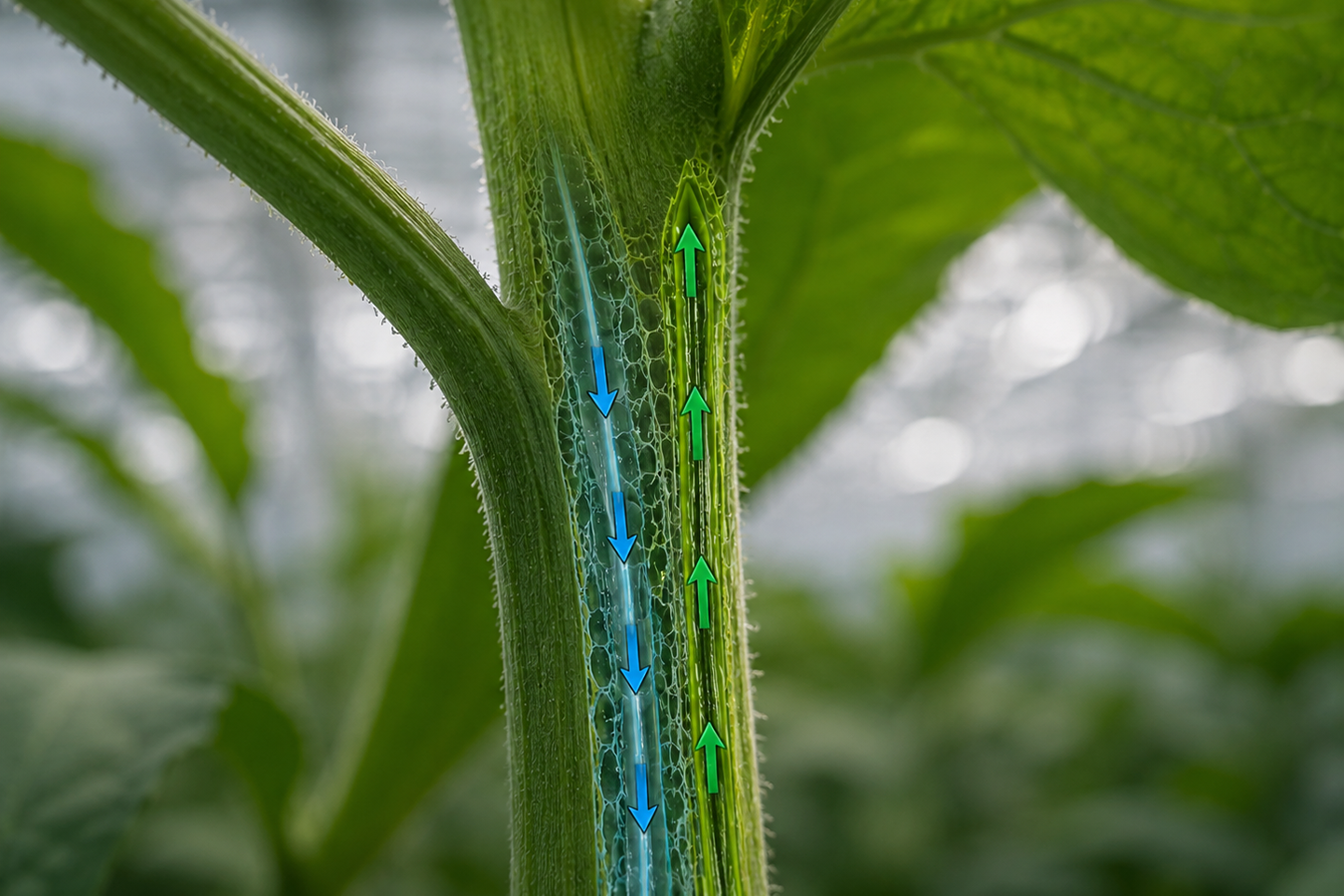
How plants transport water, minerals and sugars
Open: How plants transport water, minerals and sugars
Understanding absolute humidity in greenhouse climate control
Open: Understanding absolute humidity in greenhouse climate control
How do climate strategies influence plant health and pest pressure?
Open: How do climate strategies influence plant health and pest pressure?