In high-tech greenhouses, climate control has become increasingly sophisticated. Growers can monitor temperature, humidity, CO₂ and radiation, while screens, lighting and ventilation systems help maintain the desired conditions. Yet even when the climate computer shows the right values, plants may still experience conditions that affect their growth, transpiration and health. The reason? The climate measured in the greenhouse is not necessarily the climate experienced by the plant.
Why climate control isn't Enough
Greenhouse Microclimate
What is microclimate in a greenhouse?
Microclimate refers to the local conditions around a plant or leaf. These can differ significantly from the temperature and humidity measured by a standard climate sensor.
One important factor is the boundary layer: a thin layer of relatively still air surrounding a leaf. When there is little air movement, this layer becomes thicker. Water vapour released through the stomata can then accumulate around the leaf, while the movement of CO₂ towards the leaf becomes more restricted.
This matters because plants depend on the exchange of gases and energy with their surroundings. A climate that appears suitable at sensor level may therefore create less favourable conditions within the crop canopy.
How can you improve the microclimate in a greenhouse?
Air movement is an important part of the solution. Sufficient air movement through the canopy helps reduce the boundary layer and supports the exchange of heat, water vapour and CO₂ around the leaves.
However, simply installing more fans does not guarantee a better microclimate. In tall greenhouses, horizontal airflow fans may be positioned well above the crop, limiting their influence on conditions between the leaves. Growers need to consider where the air is actually moving, rather than assuming that running fans provide sufficient circulation.
Why is the climate inside the crop different from the climate computer?
A standard measurement box provides valuable information for climate control, but it represents only the conditions at its location.
Temperature and humidity can vary both horizontally and vertically. The climate above a closed screen may differ from the climate below it, while the conditions around hanging fruits or inside a dense canopy can be different again.
Research into Gerbera flowers, discussed by greenhouse climate specialists, illustrates this point. Measurements taken inside the flowers revealed temperature and humidity conditions that could differ from those recorded by the greenhouse climate computer. Under certain conditions, this can contribute to condensation and increase the risk of fungal diseases such as Botrytis.
For growers, the practical lesson is clear: where you measure matters. Additional measurements near critical crop zones, together with tools such as thermal cameras, can help reveal differences that a single sensor may miss.
When is condensation most likely to occur?
Condensation becomes a risk when a plant surface cools below the dew point of the surrounding air. Moisture then condenses on the surface.
One particularly important moment is the transition from night to day. A sudden increase in solar radiation can rapidly increase plant activity and transpiration. If the greenhouse cannot remove the resulting moisture quickly enough, humidity can accumulate within the crop.
The same challenge can occur when ventilation is reduced or screens are closed. As the crop cools later in the day, condensation may develop if moisture has not been adequately removed.
How can growers reduce condensation in a greenhouse?
The first step is to understand how radiation, temperature, humidity and air movement interact. Growers can use measurements at relevant crop heights to identify potential problem areas and adapt ventilation and screen strategies accordingly.
There is no single setting that works in every situation. The right approach depends on the crop, outside conditions, greenhouse design and the way the different climate systems interact.
How does LED lighting affect greenhouse microclimate?
Switching from HPS to LED lighting changes more than the amount of light reaching the crop. LEDs generally provide less radiant heat than HPS at comparable electrical input, changing the balance between light and heat.
As a result, the plant may respond differently even when the greenhouse air temperature remains unchanged. Plant temperature, transpiration and air movement can all be affected.
Growers therefore need to reassess their climate strategy when changing lighting systems. Heating, screens and air movement may need to be adjusted to maintain suitable conditions around the crop.
From climate control to plant-focused growing
A well-controlled greenhouse climate is not simply a matter of maintaining target values on a computer. It requires understanding what those values mean for the plant.
By looking beyond the standard measurement box, growers can identify differences within the canopy, recognise potential condensation risks and better understand the effects of lighting and air movement.
The key question is not just whether the greenhouse climate is under control, but whether the conditions around the plant support healthy growth. That is where understanding microclimate becomes an essential part of climate management in high-tech greenhouses.
Are you ready to look beyond the climate computer? Understanding air movement and microclimate is key to creating the right conditions for healthy plant growth.
This article introduces the principles of greenhouse microclimate. Explore the plant architecture and microclimate course to deepen your understanding and learn how to apply these insights in practice.
Continue reading
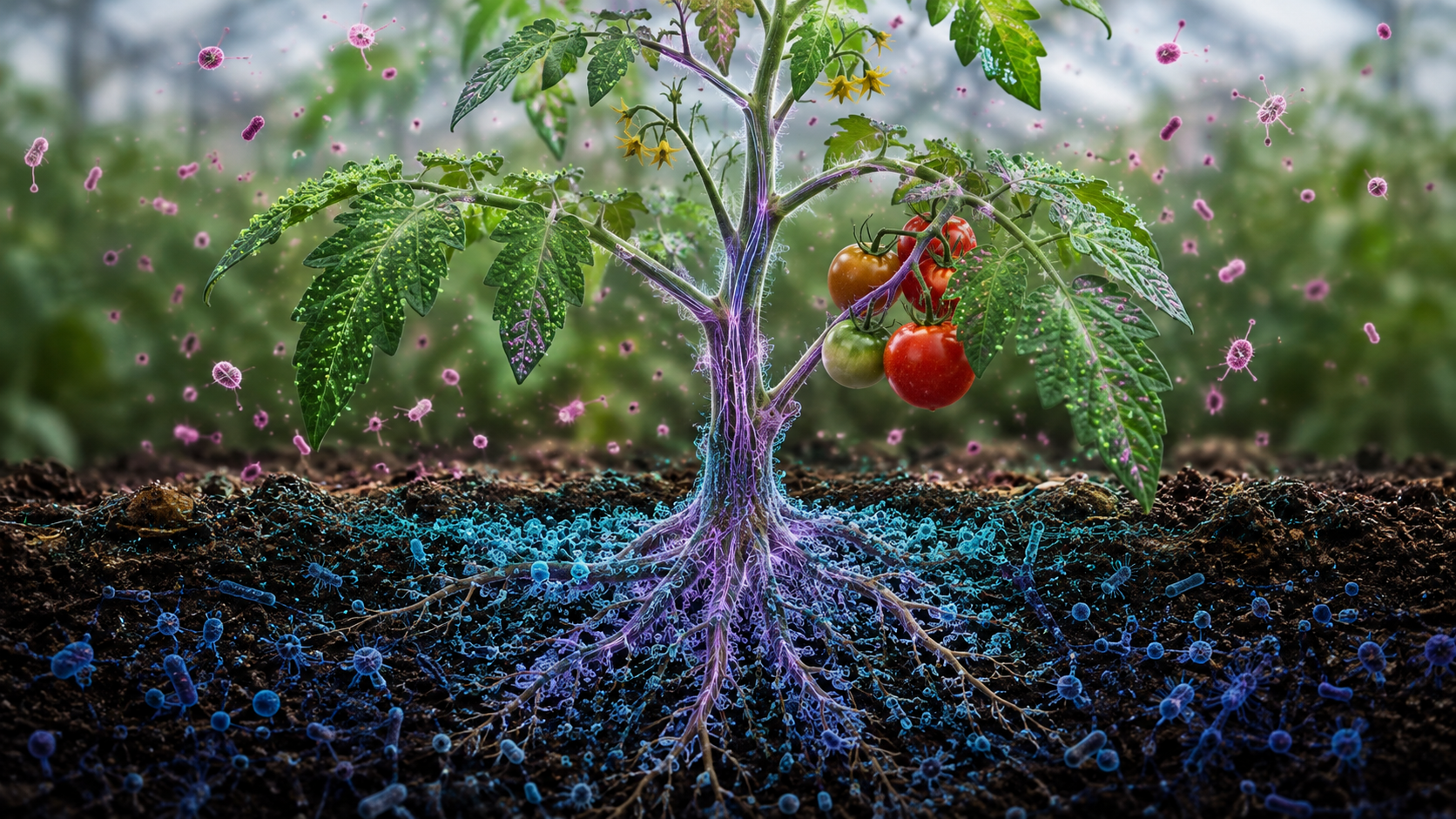
The Rhizophagy Cycle: What happens between roots and microbes?
Open: The Rhizophagy Cycle: What happens between roots and microbes?
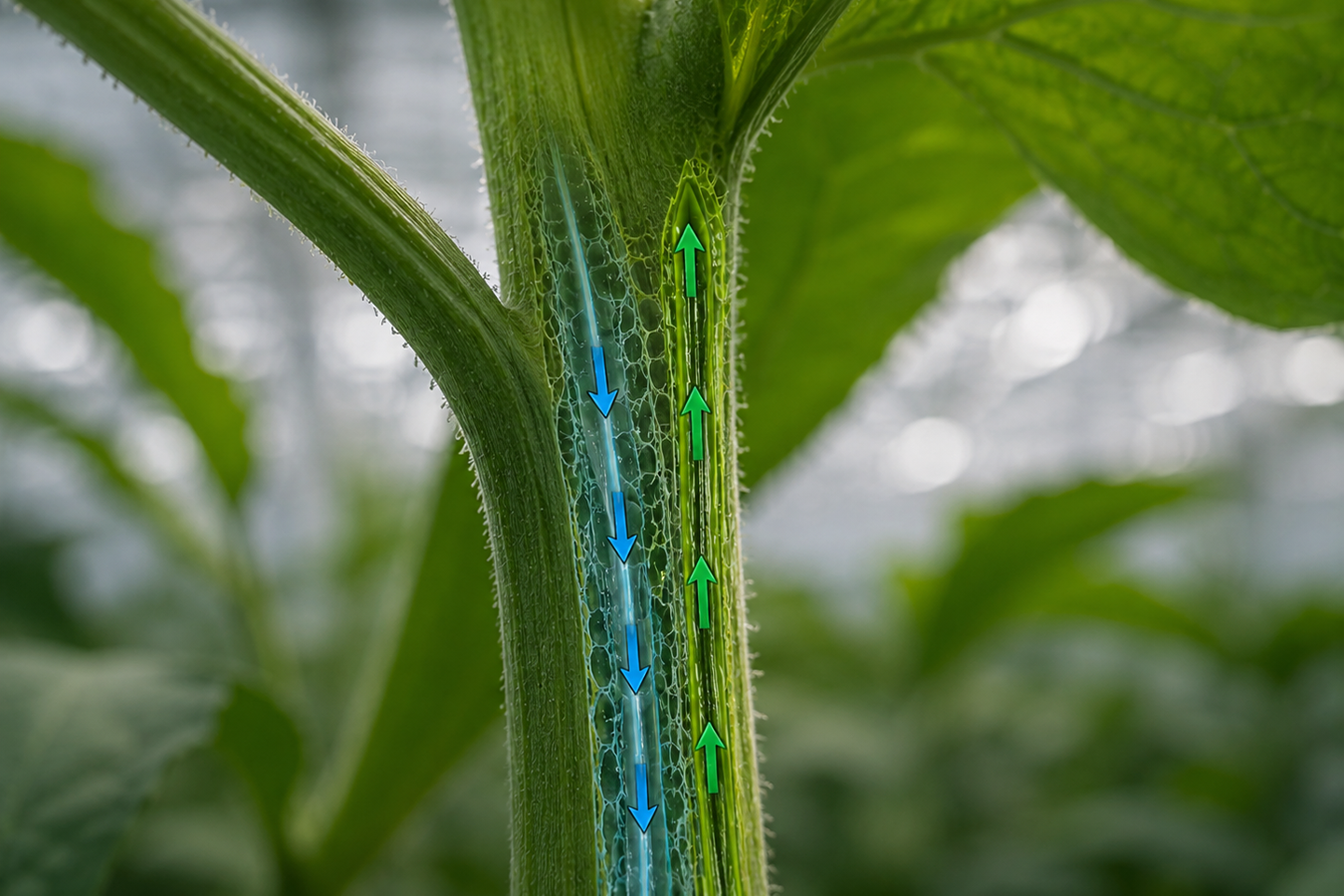
How plants transport water, minerals and sugars
Open: How plants transport water, minerals and sugars