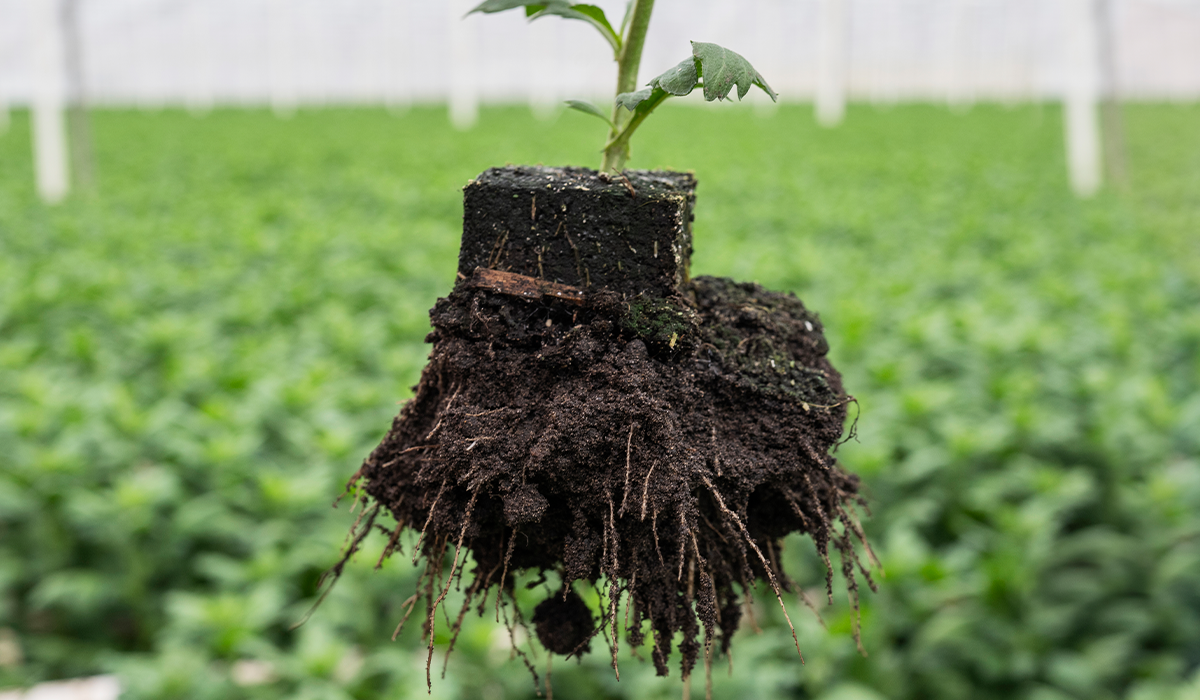
A plant does not function alone. Around its roots, on its leaves and even inside its tissues, it lives together with a community of microorganisms. Together, the plant and these microbes form what is known as a holobiont. For growers, this concept offers an interesting way to look at plant health: what can a plant achieve by working together with its microbial community?
What is a plant holobiont?
Why do plants work together with microbes?
Plants have one major limitation: they cannot move. If minerals are scarce in one location, a plant cannot simply move to a richer one. And when conditions become stressful or a pathogen attacks, it cannot leave. Microbes help compensate for this limitation.
Bacteria and fungi can explore parts of the growing medium that roots cannot reach themselves. They can help mobilise minerals and make them available to the plant. In return, the plant supplies microbes with sugars and other carbon compounds, including through root exudates.
The plant feeds the microbes, and the microbes help the plant access its environment.
How do microbes influence nutrient availability?
Nutrients are not always available to a plant simply because they are present in the growing medium. Their chemical form matters too.
Microbial activity can influence the chemical environment around the roots and help convert nutrients into forms the plant can use. This is also connected to processes involving pH and redox potential (Eh).
Elements such as iron, manganese and copper can change their availability depending on their oxidation state. Microorganisms can influence these processes and, as a result, contribute to nutrient availability.
Where do plant-associated microbes live?
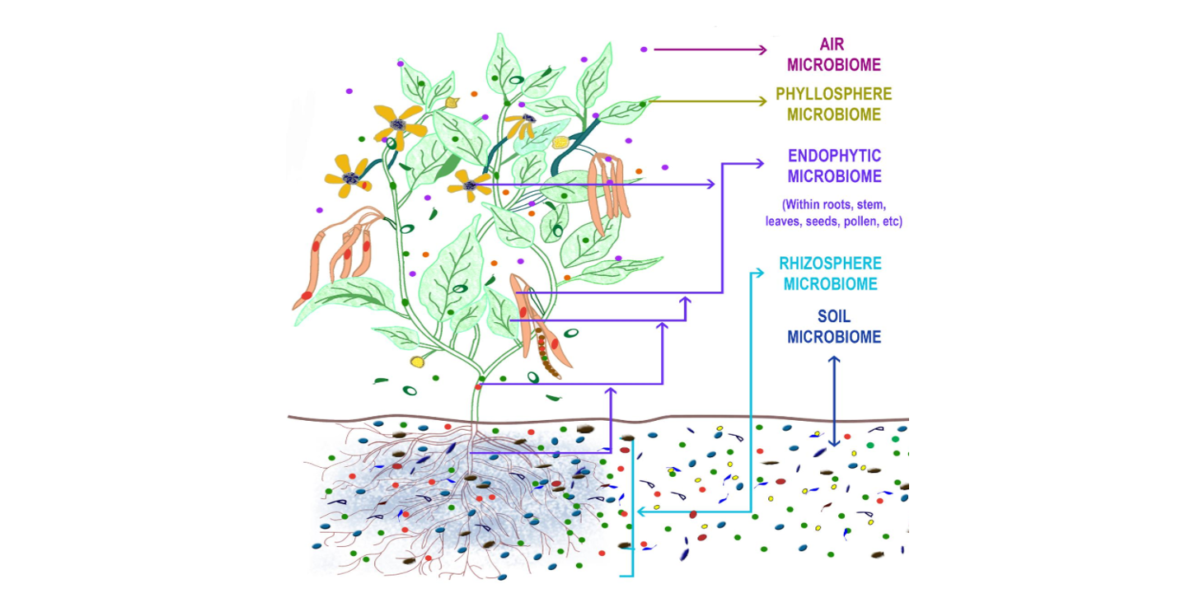
The relationship doesn’t stop at the roots. Microbes can be found in the rhizosphere around the roots, on the plant surface in the phyllosphere, and inside plant tissues as endophytes. Microorganisms are also present in the surrounding air.
The plant is therefore not surrounded by one microbial environment, but by a network of different microbial communities.
Why does the holobiont matter for growers?
Modern greenhouse horticulture gives growers increasing control over climate, irrigation, nutrition and other growing conditions. But the plant experiences all of these together with its microbial environment.
Understanding the holobiont means looking beyond the plant as an individual organism and considering the plant and its microbial community as an interconnected system.
The plant is not growing alone. Understanding who it is growing with can help us better understand how it grows, responds and stays resilient.
Want to understand where your plant’s assimilates really go? Explore the course Where do your assimilates really go? or dive deeper into the connection between plant health, pH and redox potential with our free webinar.
More about the courseContinue reading
Greenhouse microclimate: Why climate control isn’t enough
Open: Greenhouse microclimate: Why climate control isn’t enough
The Rhizophagy Cycle: What happens between roots and microbes?
Open: The Rhizophagy Cycle: What happens between roots and microbes?
How plants transport water, minerals and sugars
Open: How plants transport water, minerals and sugars