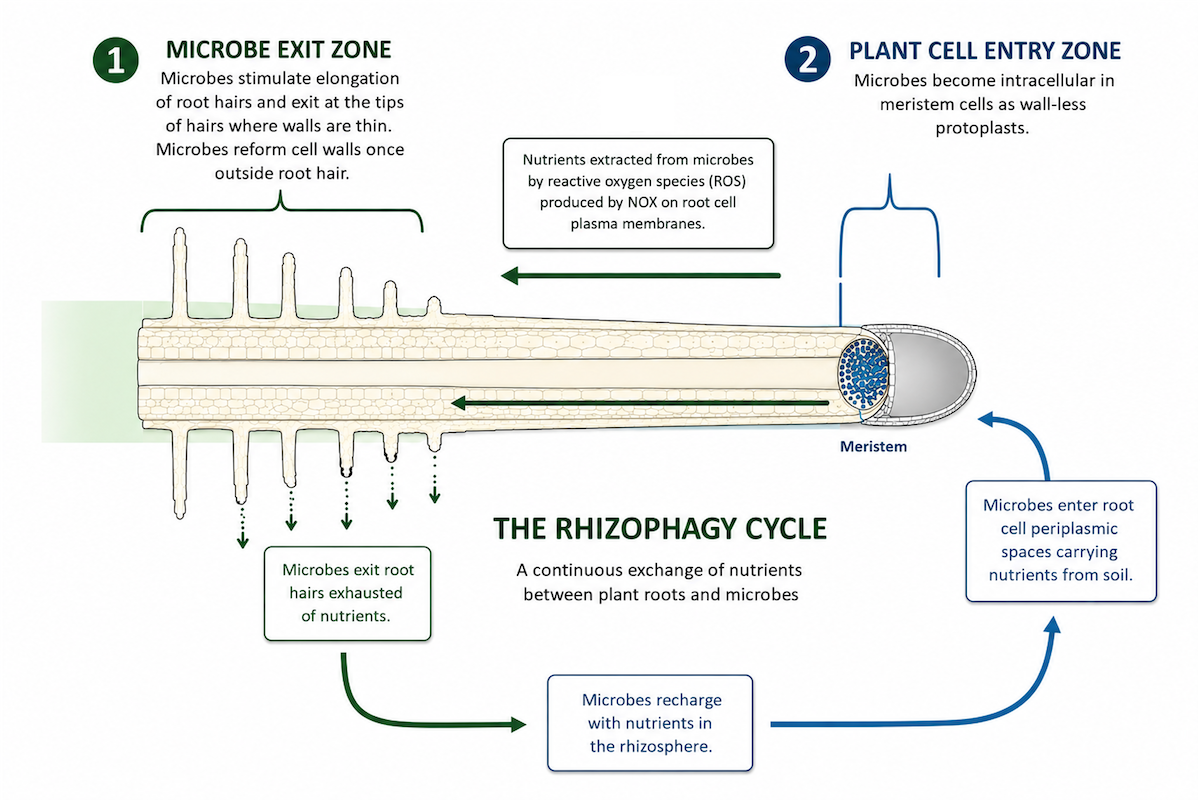
When growers look at roots, they usually look at what they can see. Are they white? Are there enough roots? Are they growing well? Are there root hairs? But there is another part of the root zone that is much harder to see: the interaction between the plant and the microbes living around its roots. One of the processes that gives us a different way of looking at this is the rhizophagy cycle. Research into this plant-microbe interaction has shown that plants can interact with bacteria at the root tip in a remarkably active way.
What happens between roots and microbes?
The Rhizophagy Cycle
What is the rhizophagy cycle?
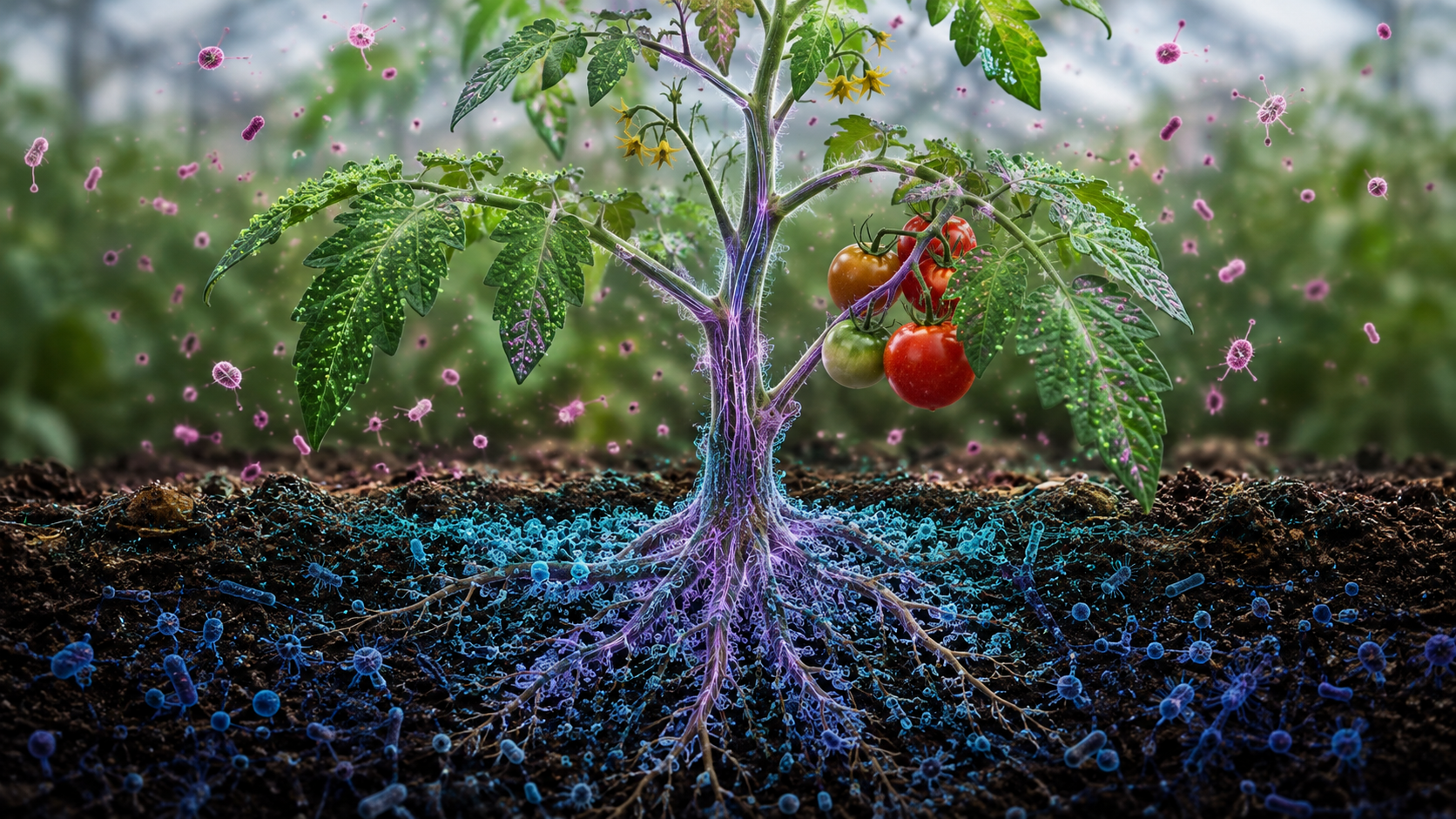
The process starts at the root tip. The plant releases sugars and other compounds into the surrounding root zone through root exudates. These compounds can attract bacteria towards the growing root tip. The bacteria use the compounds released by the plant and can interact with minerals and other compounds in their environment. The plant then takes up some of these microbes into the root.
Inside the root, the plant can extract compounds from the bacteria, including nutrients, amino acids and other substances. Oxidative processes are involved in this stage, which is where the connection with the plant’s redox environment becomes interesting. But the bacteria are not simply destroyed. They are released from the root again and can continue growing and interacting with the plant and its environment.
The plant is therefore not simply taking nutrients from the substrate. It is also interacting with a microbial community that can influence the availability of resources around the root.
What does the plant get in return?
This raises an interesting question for growers: why would a plant spend valuable assimilates feeding microbes around its roots? Root exudates contain sugars and other compounds that provide energy for microorganisms. From the plant’s perspective, this can be seen as an investment in the root environment.
The microbes, in turn, can contribute to the availability of minerals and other compounds that the plant needs. According to the rhizophagy model, microbial activity around the root tip may stimulate root hair formation.
The plant feeds the microbes. The microbes interact with the environment around the root. The plant then takes up compounds from this microbial system. This gives a different perspective on the assimilates produced by photosynthesis. Not everything the plant sends towards the roots is simply “lost”. Some of it can become part of the interaction that takes place around the root.
Can the plant influence which microbes it attracts?
This is where the story becomes even more interesting. Plants can influence the microbial community around their roots through the compounds they release. Their root exudates can influence the microbial community around them.
One example discussed in relation to the rhizophagy cycle is phosphorus. When phosphorus availability is limited, changes in root exudates can favour microorganisms that are able to mobilise or bind phosphorus. These microbes can then become part of the interaction around the root.
The idea is that the plant can influence its microbial environment according to what it needs. For growers, this changes the question from “Which nutrients are present in the root zone?” to something broader: “What is the plant doing to make those nutrients available?”
What can roots tell us?
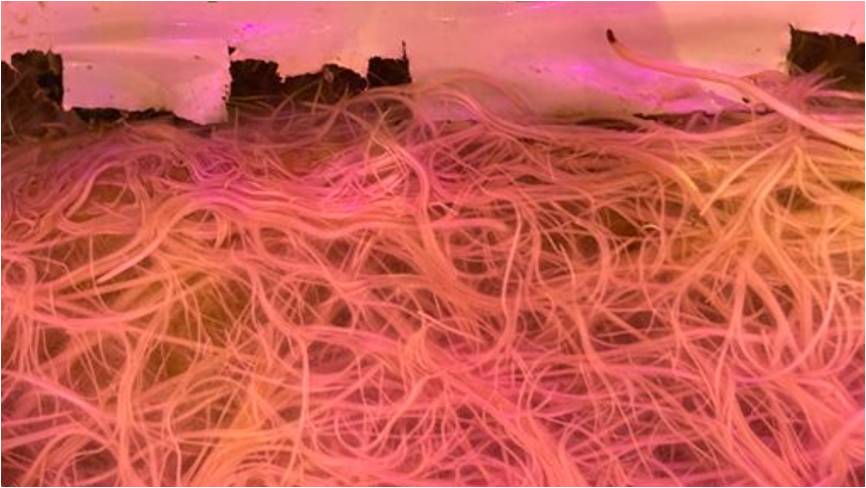
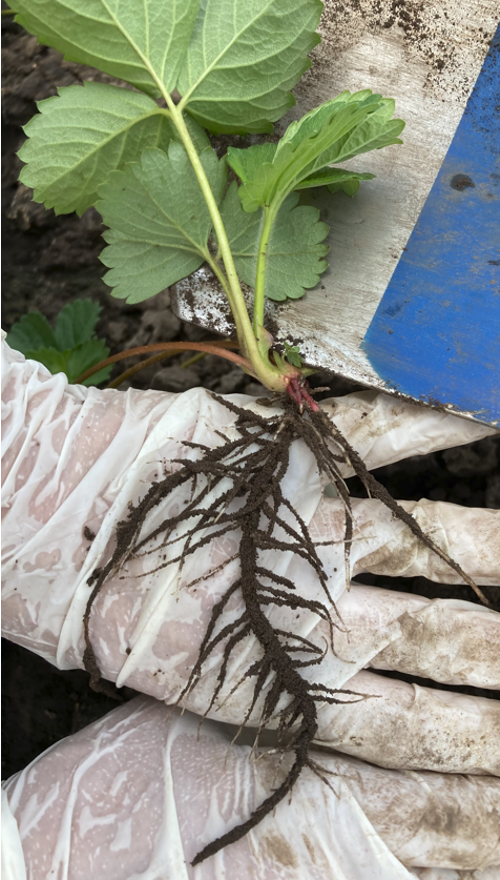
This also changes how we look at roots. A root covered in substrate and microbial material can look very different from a clean, white root growing in an inert substrate. But appearance alone does not necessarily tell us which plant is healthier.
Root hairs are another interesting example. According to the rhizophagy, microbial activity around the root tip can stimulate root hair formation. This means that root hair development may provide a visible clue that plant-microbe interactions are taking place below the surface.
It is therefore worth looking at more than root length and colour. What is happening around the root may be just as interesting as the root itself.
What do microbes need to thrive?
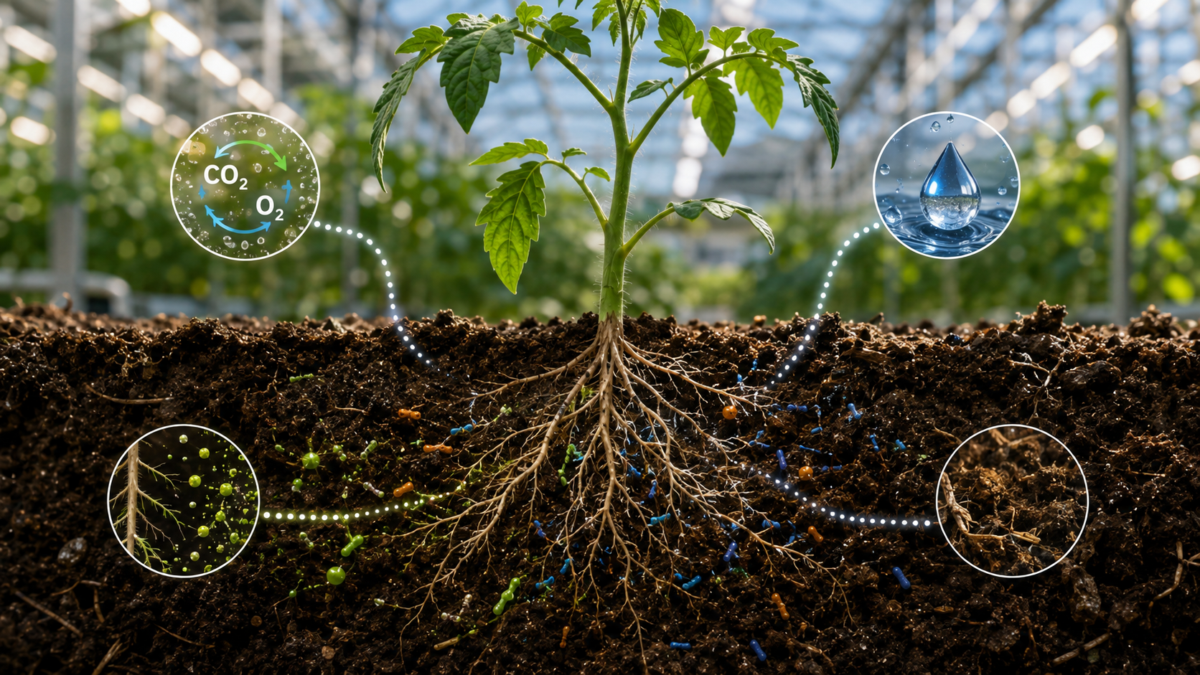
If we want to understand this relationship, we also need to consider the environment in which the microbes live. Their requirements are relatively simple: air, water, food and a house.
Microbes need oxygen, water and an energy source. In the rhizosphere, part of that food can come directly from the plant through root exudates. They also need a suitable physical environment in which they can establish themselves.
This can be particularly interesting in inert substrates such as rockwool or stonewool. The substrate may provide an excellent environment for controlling water, oxygen and nutrients, but it does not necessarily provide the same biological structure as an organic growing environment.
That raises another question for growers: how much attention do we give to the environment of the microbes living around the roots?
A different way of looking at roots
The rhizophagy cycle gives us a different perspective on the root zone. Instead of seeing roots simply as structures that absorb water and nutrients, we can also see them as part of an active biological system. Sometimes, you may not be able to answer that by looking at the root alone. You may need to look at the invisible community around it.
The rhizophagy cycle is just one part of the story. In the course ‘Where do my assimilates really go’, part of the Plant Health year program, we explore how assimilates are invested in root growth, root exudates, microbial interactions and plant defence, with practical examples from horticulture.
Continue reading
How plants transport water, minerals and sugars
Open: How plants transport water, minerals and sugars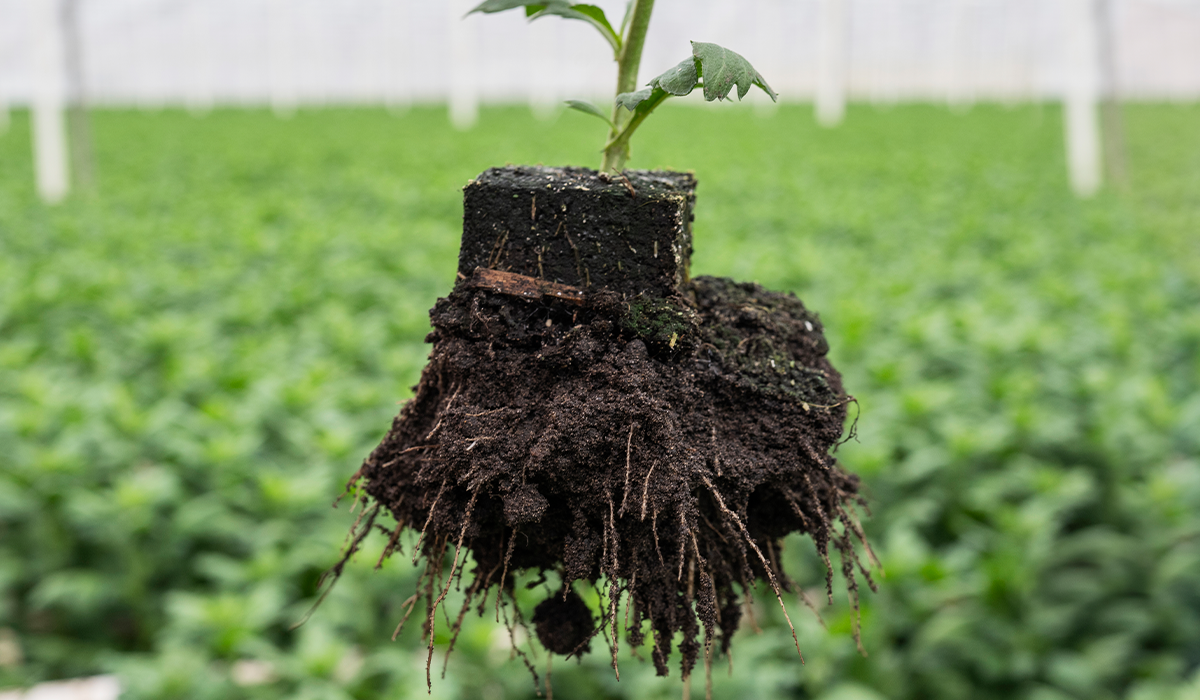

Understanding absolute humidity in greenhouse climate control
Open: Understanding absolute humidity in greenhouse climate control