The root zone plays a crucial role in the plant’s ability to take up water and nutrients. By monitoring the right parameters and setting clear targets for different stages of the crop, growers can better understand what is happening inside the slab and adjust their irrigation strategy when needed.
Measure your slab parameters
Measuring = Knowing = Thinking = Doing
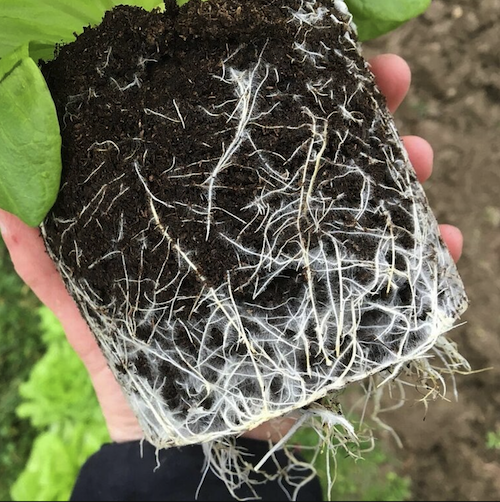
The root system is an essential part of the crop, but it is often underestimated. For many growers, the root zone is still something of a black box in which many processes take place out of sight.
Yet this is where the plant takes up the water and nutrients it needs to grow. When conditions in the root zone are not right, the plant may struggle to take up the right amount of water and nutrients. Eventually, this can disturb the plant’s balance and affect both yield and crop quality.
To understand what is happening below the surface, growers need to monitor the most important root zone parameters. These are often referred to as the Big Five: water content (WC), EC, pH, oxygen (O₂) and temperature.
Monitor water content and EC in real time
Real-time measurements of water content and EC can help growers understand how the root zone responds to irrigation and crop activity. Sensors show whether the slab is becoming too wet, which can lead to oxygen deficiency, or too dry to sufficiently support the plant.
These measurements also help growers discover the limits of their crop. For example, if EC starts to rise unexpectedly at a certain time of day or under specific conditions, this can be a signal that the irrigation strategy needs to be adjusted.
Over time, continuous measurements make it possible to recognize patterns and better understand how the root zone responds during different periods of the day and different stages of the crop.
Keep track of pH
pH also needs to be monitored. When the pH in the root zone becomes too low or too high, the uptake of nutrients can become unbalanced.
By measuring pH regularly, growers can identify changes and adjust their strategy when necessary. Maintaining the right pH range helps create the conditions in which nutrients remain available to the plant.
Set targets for every stage of the crop
Measuring alone is not enough. The real value lies in understanding the data and using it to make better growing decisions.
By setting target values for the different root zone parameters during different stages of the crop, growers can see when conditions start to move outside the desired range. This makes it possible to adjust the irrigation strategy before the plant reaches its limits.
The goal is to supply sufficient water and nutrients without creating conditions that are too wet, too dry or otherwise unfavourable for uptake. In this way, growers can make better use of the water buffer and the potential of the stone wool slab to support the plant’s balance.
Continue reading
How plants transport water, minerals and sugars
Open: How plants transport water, minerals and sugars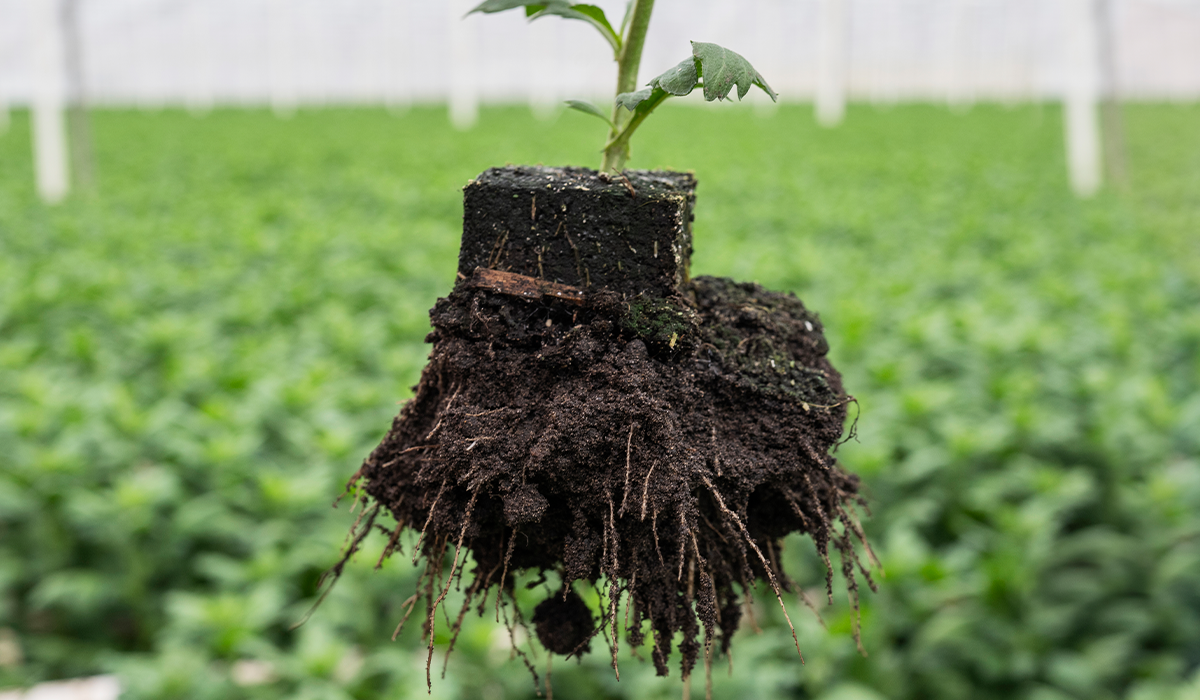
Understanding absolute humidity in greenhouse climate control
Open: Understanding absolute humidity in greenhouse climate control